Black magic of high-end power
It’s been a while (2 years, to be exact) since we originally published the review of AAI Assoluto power cable. Although the Assoluto is one of the great power cables out there in the traditional sense, the review discussed its use in a non-standard application (hence NSA) – the cable was connected to the power circuit to which the audio components were connected too, but it was not connected to any of the components, thus freely hung in the air with its IEC end. I called it parallel filtering for the lack of a better term, but who knows what actually caused the improvement in the system’s sound.

I am not going to repeat all the details here – please read the original article. The purpose of the article, apart from highlighting an excellent product, was to bring attention of our readers to unexplored territories. If you’re open-minded, the life of an audio enthusiast is never boring: there are always ways to further improve the sound in our listening rooms. Not always it can be fully explained, however. The article generated generous feedback, and I am happy for it.
Out of experiments, that our readers conducted, I would like to highlight the following two, plus I am also adding additional two observations of mine. Here we go.
The magic Nº1: An IKEA lamp improves the sound
Martin writes: After reading your article on the AAI Assoluto NSA, I felt a huge sense of relief. I’d had a similar experience myself, and you can never be sure if it’s just a figment of your own imagination.
I’ve repeatedly noticed a situation where a targeted improvement to one thing improved something completely different, seemingly unrelated. Typically—like many others, I have both a streamer and a turntable. I replace the streamer’s power cable, and the turntable sounds better. But the streamer is turned off and I make no change to the turntable power scheme.
It doesn’t end there. I experienced perhaps the strangest phenomenon of all when I plugged a standard IKEA lamp with a a 75-watt bulb in the hi-fi power circuit – this had a very positive effect on the sound. That was a deliberate experiment. Assuming that “something” is coming out of the amplifier, we can also assume that this “something” can bounce off, come back, and somehow interfere with what’s happening inside the amplifier. As a former IT guy, I’m familiar with the principle of a “terminator,” so I placed such a “terminator” next to the amplifier, and surprisingly, it did what I expected (and of course—I verified this with the help of my friend who had no idea what type of change he was listening to). As you write—it works, although I haven’t been able to find a clear explanation why.

Martin goes on explaining, that in his IT practice on 10 Mbps BNC coaxial networks, a 50-ohm terminator was used on the BNC connector to terminate the physical Ethernet bus network with several computers. The terminator prevented the signal from reflecting off the end of the transmission line and ensured reliable communication. The principle is that reflected signal interferes with new data, causing data corruption. Without it, the entire bus would not work.
After moving into my new place, where I had set up two dedicated circuits for my audio system—one for the amplifier and one for the source components, each with its own circuit breaker and outlet—it didn’t work. The result was exactly the opposite: the sound was so unpleasantly harsh that I immediately got rid of the lamp.
The magic Nº2: An expensive high-end power cable as a road to nowhere.
Daniel writes: Thank you very much for the article on the AAI Assoluto NSA. I can confirm a similar, significant, and revelatory experience with my system consisting of Bowers & Wilkins 803D speakers, Shunyata Research Denali, Luxman D03, Meitner MA1 DAC, Electrocompaniet ECI 5 II, and a mix of Jorma Origo, Statement, and Nordost Odin 2 cables, along with a Nordost Odin 1 speaker cable.
Perhaps the single greatest positive improvement of the system’s sound turned out to be a spare Jorma Statement power cable plugged into the filter and not connected to anything else. The result was orders of magnitude better than when the Statement was connected to the CD player (I used and keep using another Jorma Statement on the DAC). Even with the Jorma Origo, which is a technically lesser cable on paper, on the CD player, the sound is more open, spacious, dynamic, and flows better through the system, provided that the Statement is left hanging in the power filter without passing the juice to anything else.
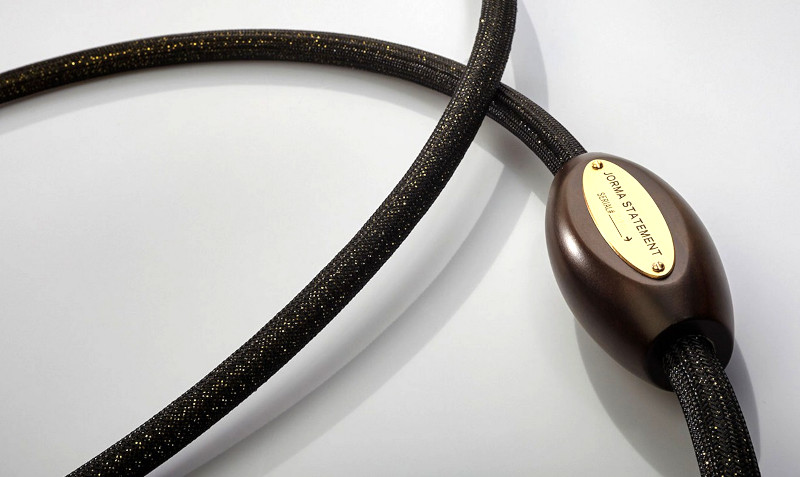
I also tried to use the Ansuz C2 and D2 in the same way, but in my system and paired with the Nordost Odin, the Jorma Statement was clearly superior in this “non-standard use” in terms of naturalness, dynamics, and enjoyment. The D2 is a very good cable and it suits acoustic music and The Doors perfectly—but it’s a bit ostentatious, like a Mercedes design, and sometimes almost comically slow. For me, the C2 works well on the source, but otherwise it’s not very colorful and often too auster.
Interestingly, in my second setup (Synergistic Research Powercell 8 UEF, Cyrus Signature CD transport with Ansuz C2, Meitner Ma 1 DAC with Ansuz D2, Luxman 550 II with Shunyata Research Sigma V2, Bowers & Wilkins 805 D4, Nordost Valhalla signal and speaker cables) in a different, smaller room, where the speakers are placed wide apart against a long concrete wall, the Jorma Statement, with one end unconnected, did not provide anything positive nor negative.
The magic Nº3: A €33,000 power grid tranquilizer
Wadax Studio PSU is an External power supply unit made for Wadax Studio Player (and Studio Clock). I am not going to describe all the details here as I will do this in the upcoming full review. Suffice to say it is exactly what the name suggests: it’s a heavy filtered standalone power supply unit with an IEC input that connects to your power distributor/conditioner or to the wall socket, and two PowerCon DC outputs, one for Studio Player, another for Studio Clock. In operation, it is ridiculous how this power supply extension unlocks the already high performance of the Wadax Studio Player. Once experienced, there is no way back.
In the AAI Assoluto NSA article, I wrote: When I plugged [the active Synergistic Research's Galileo SX Ground Block] in a spare power outlet without switching it on, my jaw dropped. The music came alive, the electronics disappeared, I could hear more of everything. No trade-offs whatsoever. For the record once again: the SX Ground Block was not switched on, neither any grounding cables were connected to it. It was used in a totally passive way, just hanging on the same AC line. It was a truly amazing transformation.
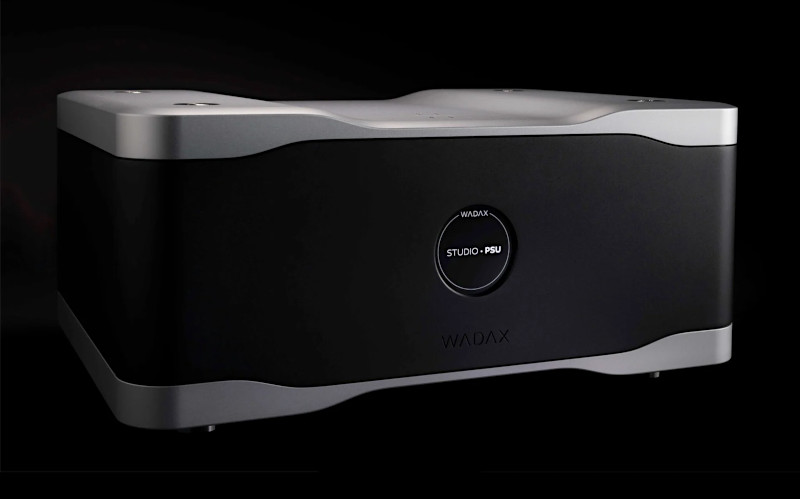
Now, you’ve probably already got the idea. In the system, featuring Wadax Studio Player, Audia Strumento No.8 Signature monoblocks, Silent Laboratories Equilibrium loudspeakers, and a complete loom of Synergistic Research top-of-the-range cables and conditioners and TweakGuru Horizonta grounding units, the Wadax Studio PSU, the Studio PSU got connected to Synergistic’s PowerCell 12 SX power outlet. However, the PSU did not pass the juice to anything else. It was just powered up, a sort of a “terminator”. A very expensive one.
As much as I had liked the sound of the system before, it was transformed. Not quantitatively – there was not more of the bass or more sparkle or a massive jump in dynamics. However, the quality of the sound grew, and it was not subtle at all. Imagine someone fires a shotgun at you. You see nothing but the result, which will be chaotic, messy, and not good for you. With the PSU, the event was like freeze frame image from a high-speed camera. You could see the pellets in the air, their positions, their contours. In the frozen calmness of the moment, you had the time to scan them, react, and avoid them. Similarly, with the Wadax PSU, the music elements become audibly better delineated; they became both more organized and organic, the timing and flow improved.
The magic Nº4: The noise that turns into music, the music that turns into noise
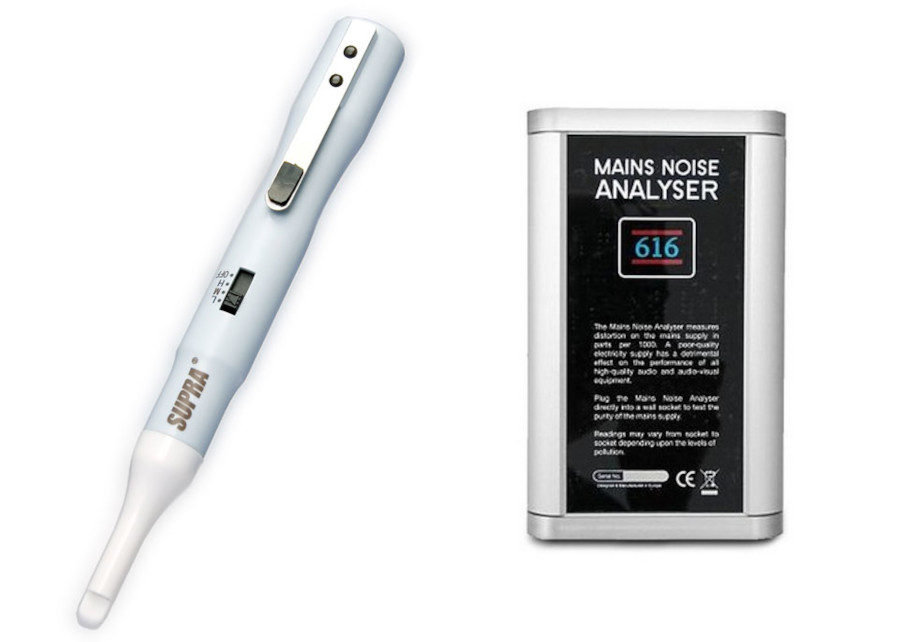
For years, Swedish Supra Cables has been selling a pen that measures mains noise, now called Supra AC Sensopen. For €29, its sensor lights up every time it measures noise radiating from sockets, poorly shielded cables, etc. The mains specialist, IsoTek, have Blue Horizon Mains Noise Analyser manufactured. A small box with a display and small speaker is plugged in a measured device. The numeric display is said to show how polluted your power supply is, the built-in speaker converts the mains noise into audible sound; the louder the sound, the more pollution. There are numerous copies of the device that can be had from Amazon or Asian marketplaces. What they really measure, is debatable. But some manufacturers like to use it in their products development and during demonstration.
One of those devices, LHY Audio EMI meter, was used by RD Acoustic to prove how well their filter works. The device’s display showed around 1600 units ‘unfiltered’; this dropped down to less than 250 after filtration. Voila, the clean power, finally. I borrowed it and tried to compare the noise on the power line before and after my power filters. I measured the noise in several system configurations during workdays in peak hours, as well as during weekend and in the middle of night. The very same device that proved the effectivity of the RD Acoustic filtering stages (remember, from 1600 to 250) read the following numbers in my case:
- 1470 – 1660: Standard domestic circuit sockets with a fridge, routers, and mobile chargers in it, during workdays peaks.
- 1820 – 1850: Dtto, at night.
- 1980: Dedicated audio circuit, unfiltered.
- 1970: Dedicated audio circuit, filtered by Shunyata Research Denali.
- 1980: Dedicated audio circuit, filtered by Stromtank.
- 1980: Dedicated audio circuit, filtered by Stromtank with power cord completely disconnected from mains, running solely on batteries and no ground wire.
- 1950: A hobby market grade extension cord in the wall of the dedicated audio circuit.
- 1950: Dtto with one Nordost Qk1 module plugged in it.
- 1950: Dtto with one Nordost Qv2 module plugged in it.
- 1945: Dtto with a mobile charger plugged in it.
- 1780: Dtto with a PC printer plugged in it.
- 1750: Dtto with a running hairdryer plugged in it.
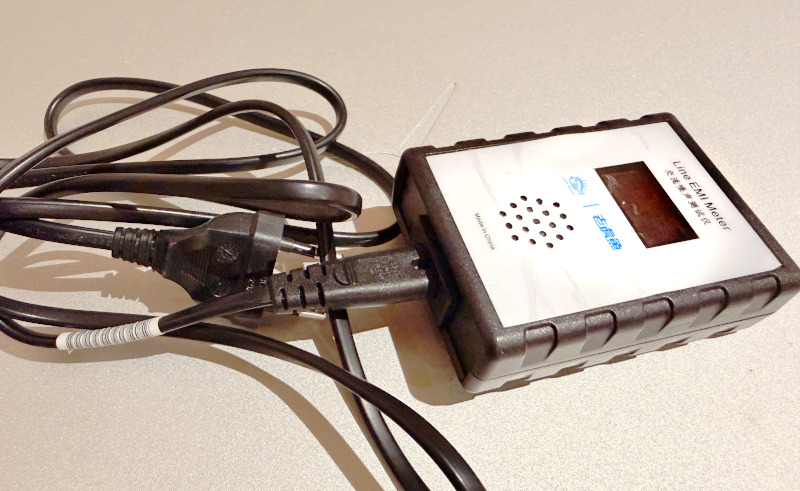
I ended up totally confused. The device measured something, but I wouldn’t dare interpret any of thos measurments—it made absolutely no sense to me. And most importantly, it did not correlate at all with how, for example, those Nordost units—which are supposed to demonstrably add interference to the power grid—or the Stromtank modes, or a phone charger, affect the sound. Plus, that little noise meter isn’t grounded, is it? It’s just a two prong plug.
I tried to look up some information on what it might do; theoretically, that noise meter probably measures frequencies between 10 kHz and 10 MHz, but the problem is that it then displays the measurements across entire broad frequency range as a single aggregated value. And some frequency ranges are important for audio, while others are irrelevant, as Shunyata points out. According to them, the most harmful interference is between 100kHz and 1MHz. So having a noise meter that measures only such a narrow range would probably make more sense. It’s interesting that Shunyata itself demonstrates the effectiveness of the Denali using similar devices, yet for me it had practically no effect. What confuses me the most is that adding more interference doesn’t change the reading, and that the Stromtank, completely disconnected from the mains and generating its own clean power, is, according to the noise meter, completely saturated with noise—practically just like the mains themselves, or worse. On the other hand, it’s interesting what it did to that RD Acoustic transformer.
Are there any conclusions?
Here, my audio logic fails. None of what I described above should provide objectively better sound, all these ´improvements´ should downgrade it, in fact. Likewise various frequency resonators (Schumann), or plug-in so-called noise cancelling devices, I am even more puzzled by my attempts to quantify (measure) the changes in pollution. While it worked in one system, it fails to deliver in another.
Is it the noisier powerline that sounds so much better? Then welcome noise, please. However, this statement would oversimplify the situation, as results vary from system to system and from household to household. It also may be, that the electromagnetical view is the wrong one and they are mechanical resonances in the powerline that matter. This topic remains a mystery to me.
P.S. If you have some good theories and opinions on what happens in the case as described, or have other examples, please share. We can modify or expand the article.
(C) Audiodrom 2026