SILENT GRID - An ultimate audiophile mains scheme
It’s interesting to witness how generation after generation follows the same path. It’s the classic line of reasoning: “Two meters of power cable from the outlet to the first component is just a fraction of the length of the line to the circuit breaker, the building’s mains distribution panel, or—heaven forbid—the power plant, so it can’t possibly make a difference.” Yet it does. Not only can those negligible lengths of wire in front of and between components improve how the system sounds, but unfortunately, they also have the power to completely ruin the whole listening experience, if you do not know what you are doing.
In this specific case—a project codenamed Silent Grid—the hi-fi setup mains lead consists of standard residential wiring in a newly built single-family home, using CYKY 3x2.5 mm² industrial copper cable in PVC insulation, where the path between the distribution panel and the outlet in the hi-fi room is part of one of the outlet circuits in the house, whose conductors are interrupted and connected countless times at individual outlets, where other household appliances and electrical installations are also connected, injecting a massive amount of noise back into the grid. Furthermore, the wires are often routed through conduits in the walls together with other cables, which further increases their interaction and interference. And since the “flow” of electrical energy is not a flow at all and does not follow any specific path, as many mistakenly believe, hi-fi components also have immediate access to all the good and bad aspects that such a power supply scheme entails. Solving this problem means addressing the usual checklist, without which you won’t get anywhere:
- Check conductor gauge and material.
- Connect the system to a dedicated circuit.
- Route the cable to the first connection point (here, the GMG X-Blocker, from which the Nordost Odin 2 takes over) so that the dedicated circuit is not affected by the proximity of anything else, if possible.
This is nothing the larger part of the hi-fi community hasn’t already gone through, and the task seemed quite simple. That is, until the implementation landed on Silent Laboratories’ desk. It was to be expected; the SL guys are notoriously unwilling to compromise, and so the project turned into something straight out of NASA drawing board. However, it wasn’t The Congress that decided this, but rather the owner of the hi-fi system (and the house), who was enthusiastic and willing enough to go for it. The following lines are thus a description of the entire conceptual and technical journey; perhaps they will inspire you.
Garden terraforming
The entire project began with careful planning, and experts from the Institute of Instrumentation and Control Engineering at the Czech Technical University in Prague were brought in through consultations, which led to several interesting details. But first things first.
The choice of the cable itself was based on Silent Laboratories’ own development. In the recent past, I had several prototypes of their power cables in my own system and their sound quality was rather impressive. Once they arrive at their final form, they’ll likely have no shortage of happy customers, but they only exist as prototypes for the time being. And since the decision was made to replace the entire wiring from the distribution panel at the the property's land all the way to the hi-fi outlet, the required length for that layout would be just over 50 meters. In pure silver with a 1% of gold alloy, the material cost alone for the required cross-section would run into the tens of thousands of euro. Therefore, the choice was a more financially acceptable option: silver-plated AlphaWire OFC copper wires in Teflon insulation, each with a cross-section of 0.82 mm². By braiding and loosely twisting, individual strands were gradually formed up to a final cross-section of 2 x 8.2 mm² for the phase and neutral conductors. The ground was handled completely separately, as you will read further on. This whole project required 1,200 meters of copper, silver, and Teflon.
During the technical consultations, an interesting idea emerged: the ground conductor is always a significant (and quite possibly the most significant) source of noise in mains, since noise and interference from virtually all devices is routed into it, and from the perspective of safety standards, it is not a good idea to interrupt the grounding path - so everything connects to everything. Furthermore, in most cases, the inputs or outputs of signal paths are also connected to the very same noisy ground, so this is not just a power supply issue. Unless we create a completely independent “clean” ground to which only the hi-fi system is connected, its is impossible to solve the problem. But where can we find such a ground? At the same time, we must also take into account the resistance values of such a new ground path to ensure that the current flows to the point of lowest potential.
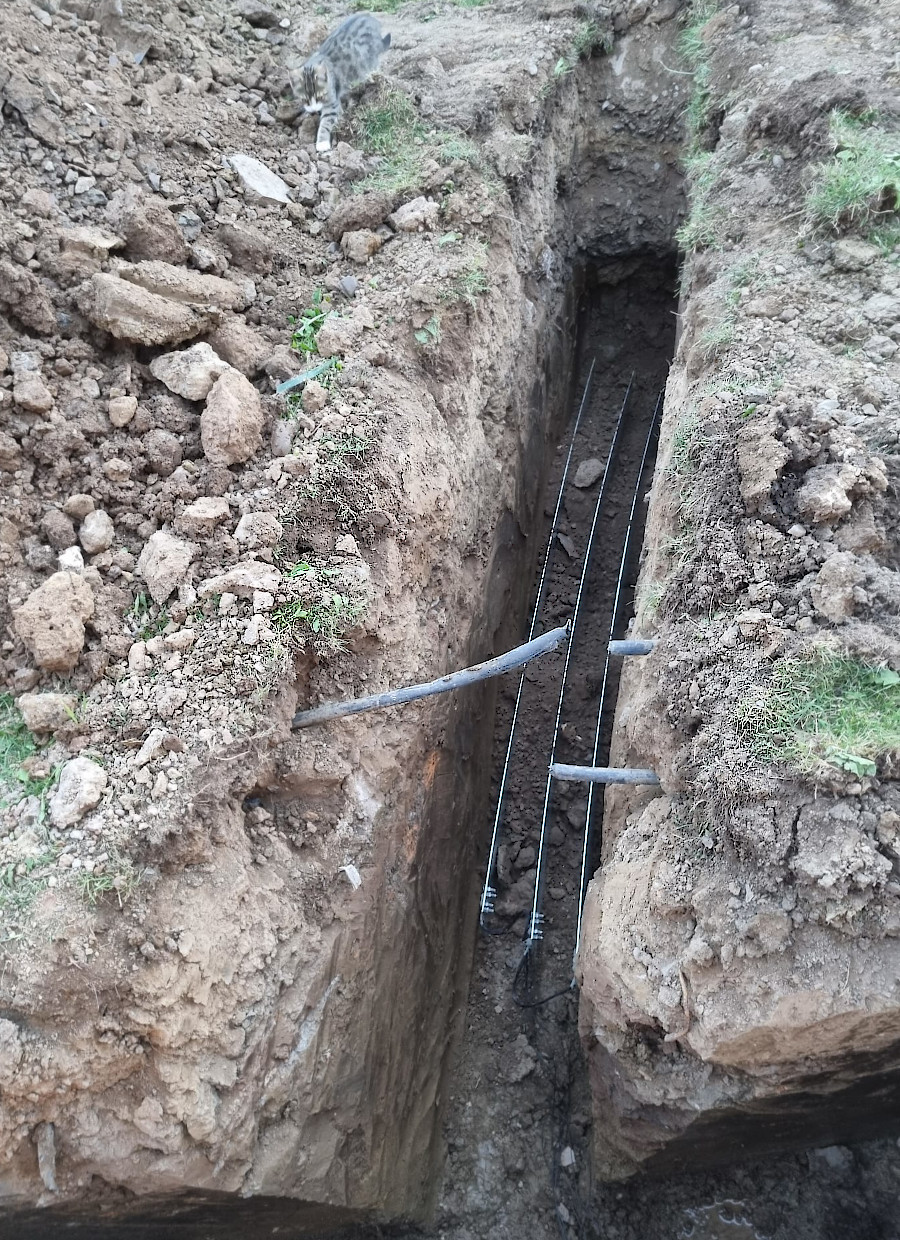
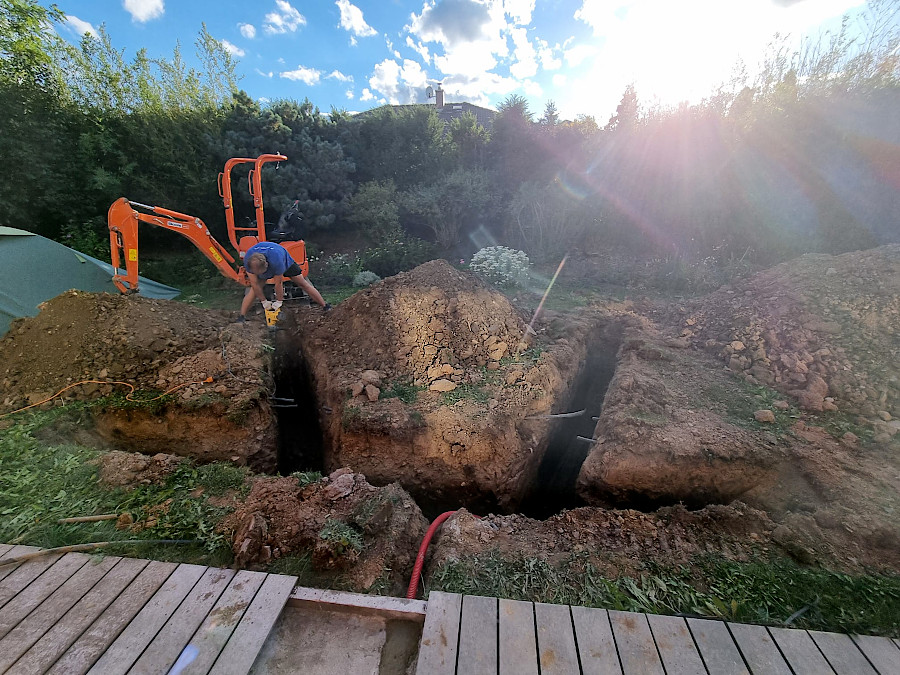
Fortunately, there is already plenty of material published on grounding schemes after years of electrical engineering practice, so after a few days of researching and a few consultations, a feasible battleplan was ready (though, of course, each of us has a different perspective on what constitutes feasibility). The guys from Silent Laboratories decided to dig up the garden and bury industrial grounding metal plates measuring 2000 x 350 mm in it. When grounding a lightning rod, one or two such plates are usually sufficient, depending on the soil conductivity at the installation site. Because the soil at this site is highly conductive due to its high clay content and high moisture levels resulting from the property’s location, the decision was made to bury twelve plates. According to the currently harmonized European standards for lightning protection, the grounding resistance requirement for a lightning rod is a maximum of 10 ohms. What is sufficient for lightning is not sufficient for Diana Krall, so the project aimed for a final resistance in the order of 0.01 Ohm. A spot next to the house was chosen for the plates so that it would not be unnecessarily far from the listening room and at the same time would allow the plates to be positioned at various angles relative to each other. The plates were buried about 1.5 meters deep, and even though machinery was used, anyone who has ever tried to work in clay knows that it’s chore. There were also the usual side effects, such as digging right through the garden’s irrigation system, which made the whole task more eventful.
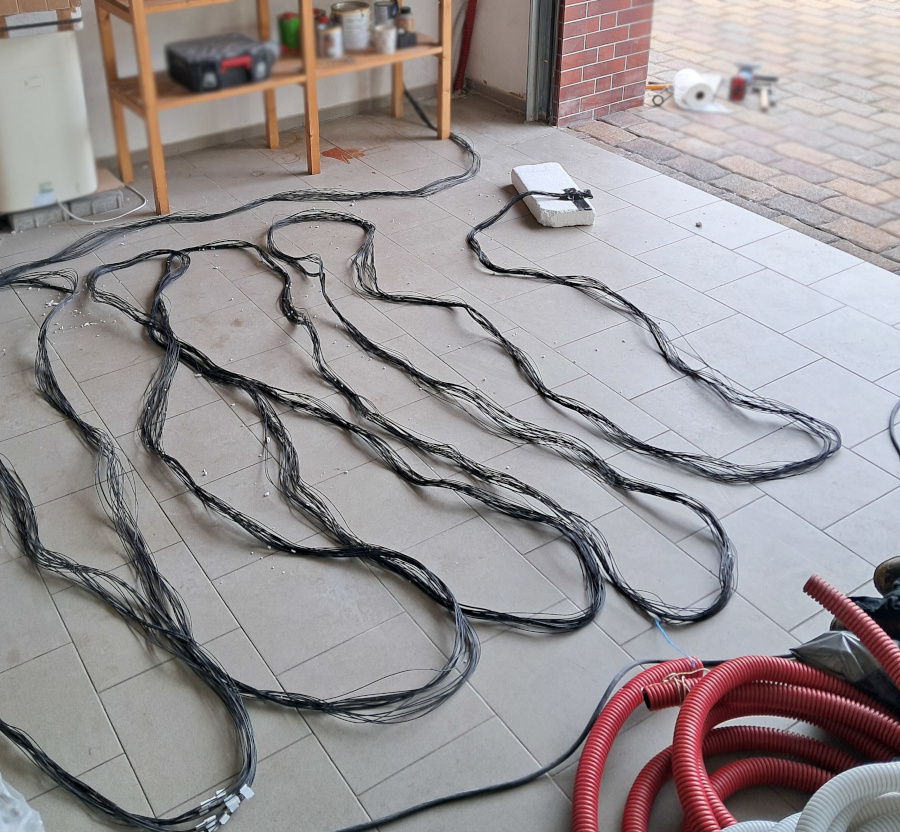
The same type of wire (a bundle of silver-plated copper in Teflon) was then used to connect the grounding plates to the socket pin in the listening room, but this time with a massive cross-sectional area of 24.6 mm² (!). The wire bundles were secured to the plates with a prepared clamp, then soldered with a tin and silver alloy solder, and the entire joint was subsequently thoroughly treated against moisture with a bitumen coating. After being placed in position, the plates were backfilled, with the soil being mechanically compacted every approximately 20–30 cm to ensure the surface of the plates was perfectly surrounded by soil without any voids.
In the house
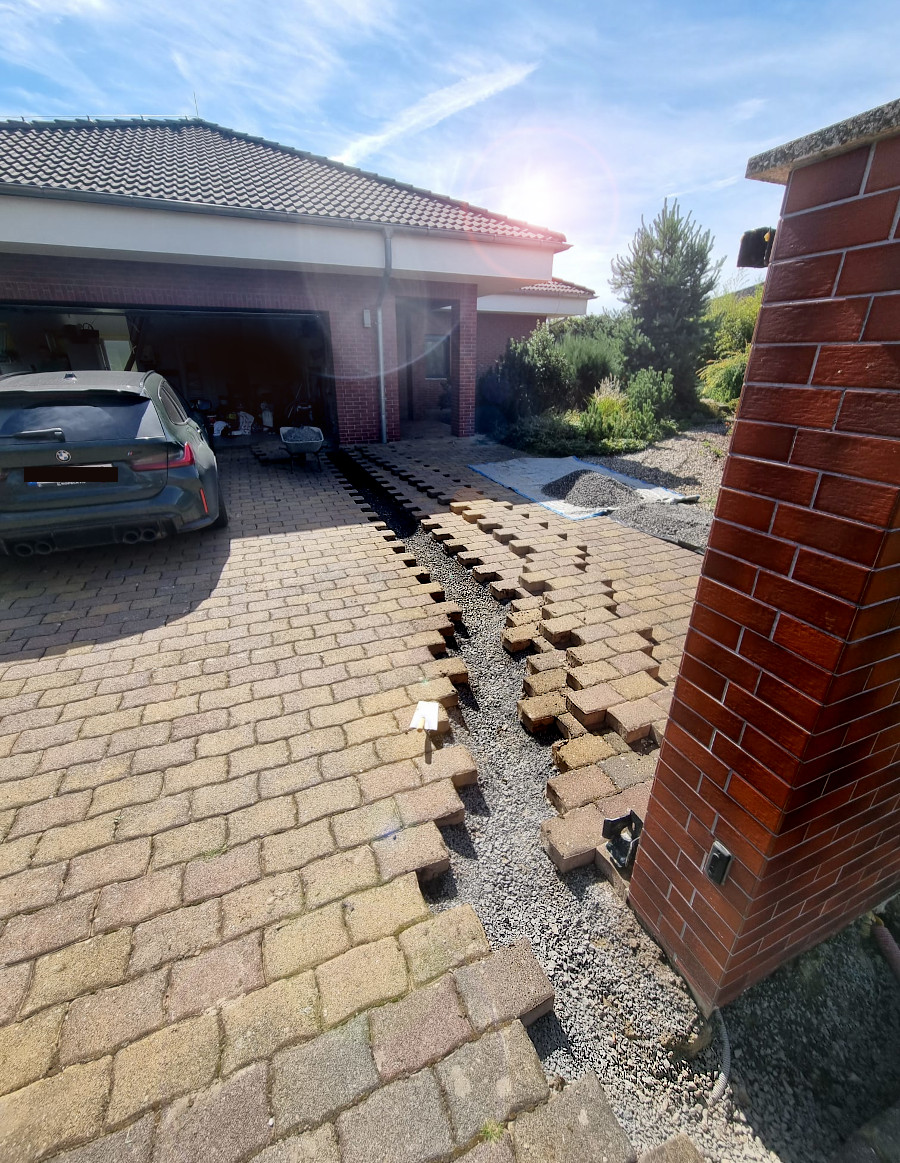
Since every interruption and splice of the cables increases line resistance, the system was designed from the outset so that the cable would start at the electrical gauge outside and end in the hi-fi room without a single interruption. Given the nature of the house where the project was being carried out, this presented quite a challenge. Especially since the client didn’t want to let an excavator into the living room, even though the project team saw no problem with it. By law, it is also necessary to provide the cable with double insulation, which further increases the space requirements for the already massive bundle of wires. After several visits and consultations, the agreed-upon route was to run from the distribution panel on the property through a plastic conduit under the driveway paving to the garage, bridge a short distance to the wall there, also under the paving, ascend to the attic under the plaster of the wall, span the distance to the listening room behind the roof beams, and then descend again to the ground floor through the ceiling to the destination outlet. The path of the grounding branch was significantly shorter: from the buried plates through the garden and under the terrace, through the perimeter wall, and again under the baseboard to the point where the grounding wires meet the rest of the conductors and run together through the wall.
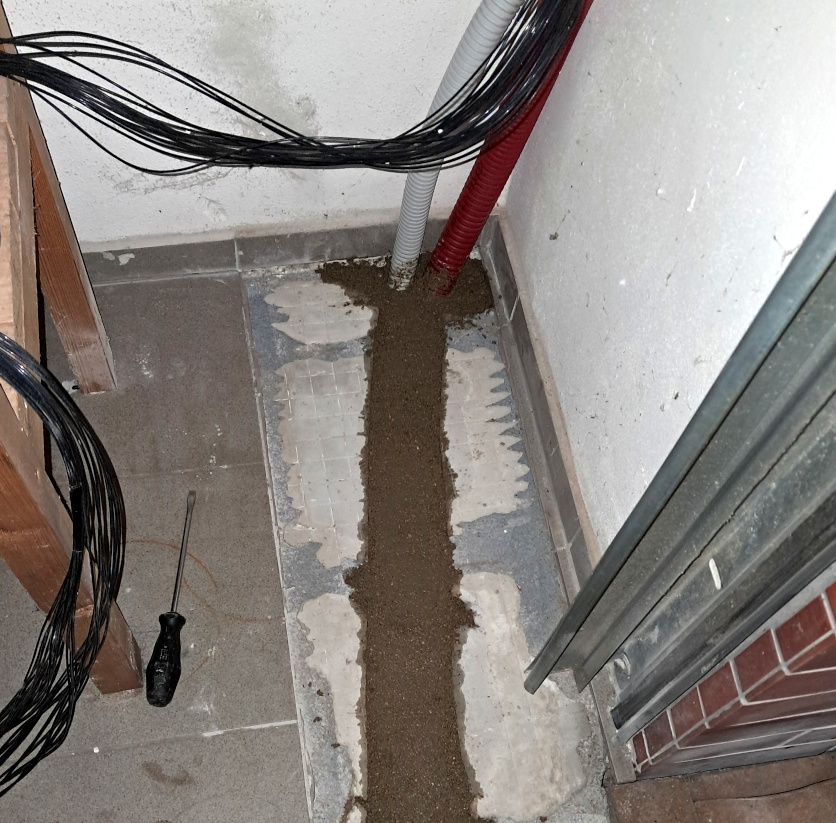
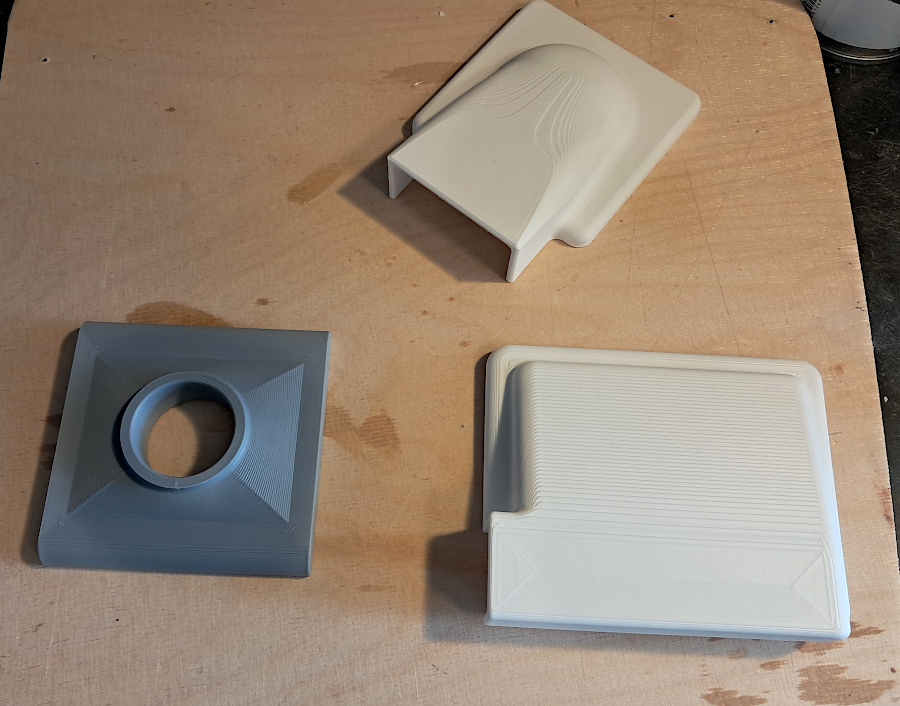
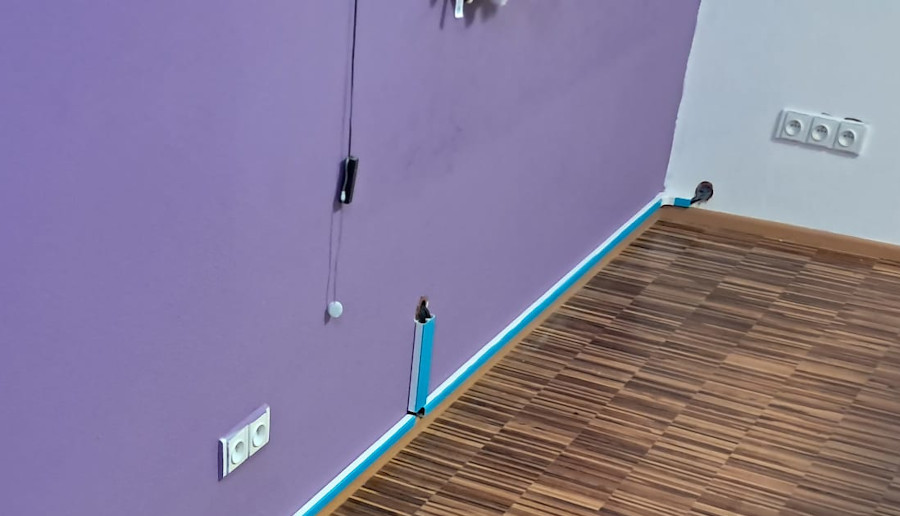
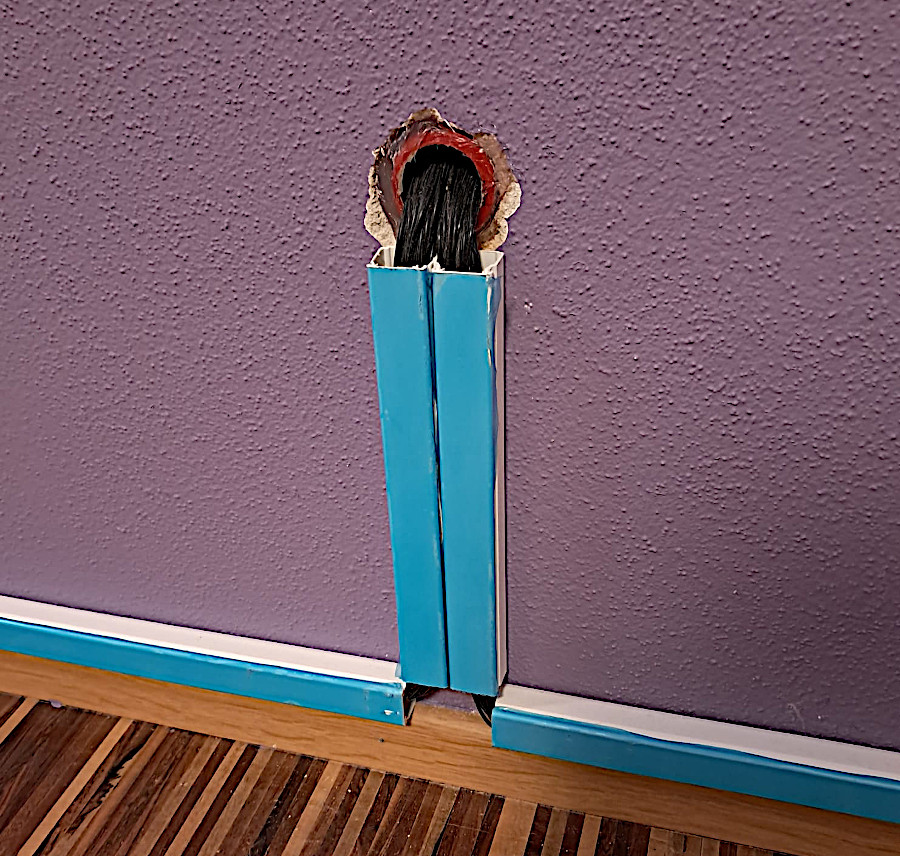
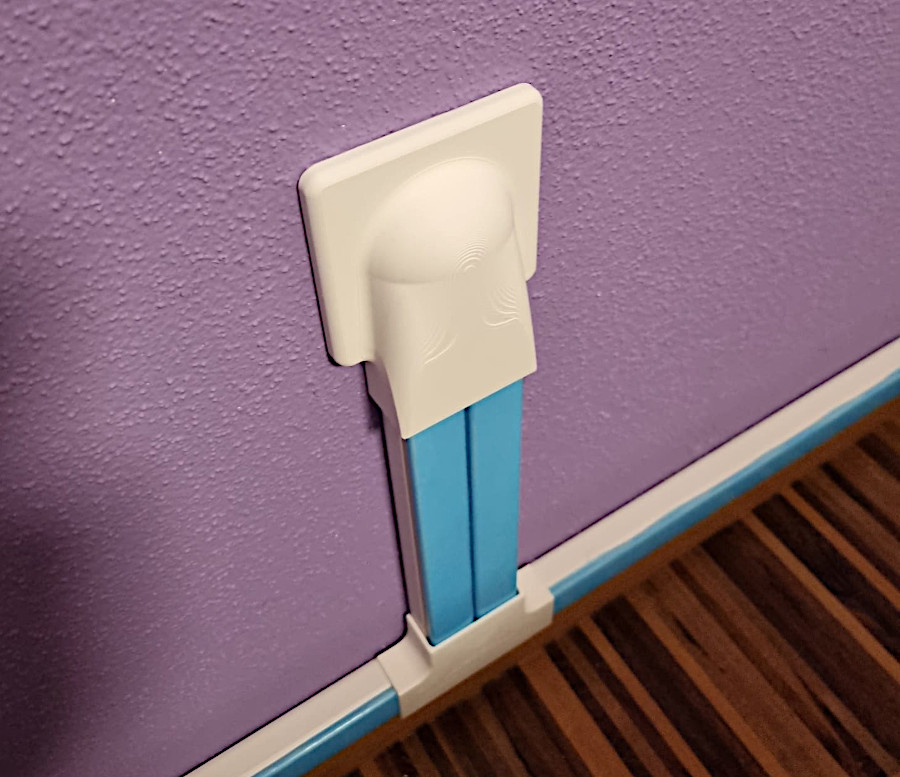
The original design called for a standard "audiophile grade" outlet in the listening room, where the mains lead would be terminated. However, it would have been a shame not to take advantage of the continuity of the entire “clean” cable run without any interruptions, so the decision was made to extend the cable all the way to the first connection point in the system—in this case, the power conditioner. A C19 connector, the Viborg VF523S with silver contacts, was chosen as the termination. A double protective braid was used on the approximately 1.5-meter-long section of cable protruding from the wall. Since the cables were too thick to fit under any commercially available wall plates, it was necessary to custom-make wall plate covers using 3D printing. The same technology was also used to produce the cable outlet cover in the listening room.
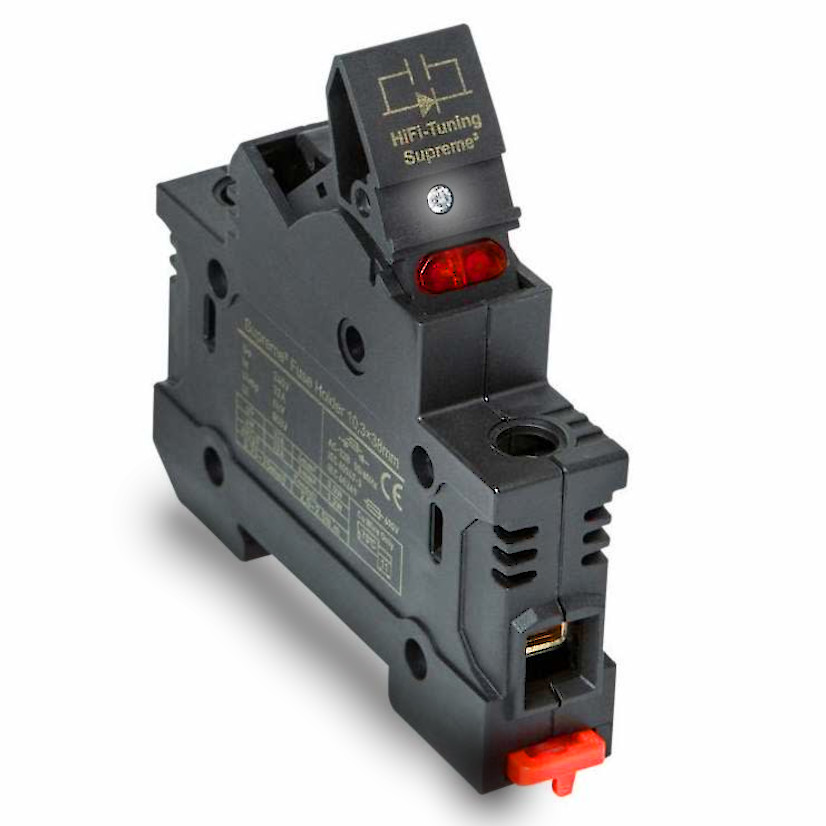
The collective wisdom of the audio community suggests that one should get rid of the RCD and purchase a classic fuse breaker. That same consensus dictates spending as much as possible on this, so the owner chose the HiFi-Tuning Diamond Supreme 3 fuse holder with gold-plated contacts (for approximately 1,000 euros, including the fuse).
Listening
By retaining the original power supply line, two alternative options for delivering power to the audio system became available. This eliminates the need to rely on auditory memory, making it possible to easily compare the differences between the original and the new solution. In effect, this compares the uninterrupted path of teh Silent Grid by Silent Laboratories with its unique grounding solution against a standard copper mains distribution, where the last couple of meters between the wall and the conditioner energy travels through Nordost Odin 2 Supreme Reference power cable. I would like to thank the owner of the system for the invitation and the opportunity to listen to the result.
The audio system currently consists of Burmester electronics (089 CD player, 088 preamplifier, and 911 mk3 power amplifier), Estelon X Diamond MkII loudspeakers, and a complete Nordost Odin 2 loom of cables. Although listening in shared living spaces is usually not ideal—and in this case, the living area connected to the kitchen is a real challenge, as it is generously sized and its ceiling, resembles a cathedral — there was not much to think about and the difference between old and new was easily audible.
As usual, once the ear gets used to something, when you take it away, the ear misses it. Fortunately, It works both directions. As an example, the bass underwent one of the most striking changes, and after switching to the Silent Grid solution for the first time, I immediately had the feeling that the change was not for better. The double bass in Spanish Harlem was more athletic, yet it didn’t have the same weight and powers. However, it also was significantly clearer and more colorful, more dynamic, and the music didn't ponder so heavily. I let the track play on repeat a few times and then switched back to the original Nordost setup; and lo and behold—suddenly the bass seems too exaggerated, muddier and out of balance. I missed a deeper insight into how the sound of a plucked bass string was initiated, developed, and how it trailed off. That’s why I mentioned that the process of perceiving change is bi-directional, and it takes the ear a moment to evaluate all the individual aspects and set a new benchmark.
Overall, the music sounded more dynamic through the Silent Grid, which I attribute to a calmer background. It’s as if the recordings received a successful remaster with a lower degree of compression. At the same time, I didn’t notice the sound becoming smoothed out or rounded—quite the opposite, the transients were more defined, but in a more natural way, not for its own sake. Overall, it’ was not a drastic change, though that would be naive to expect from a system of this caliber. Nevertheless, these improvements added up to a new sonic experience and once it is experienced, it is hard to go back.
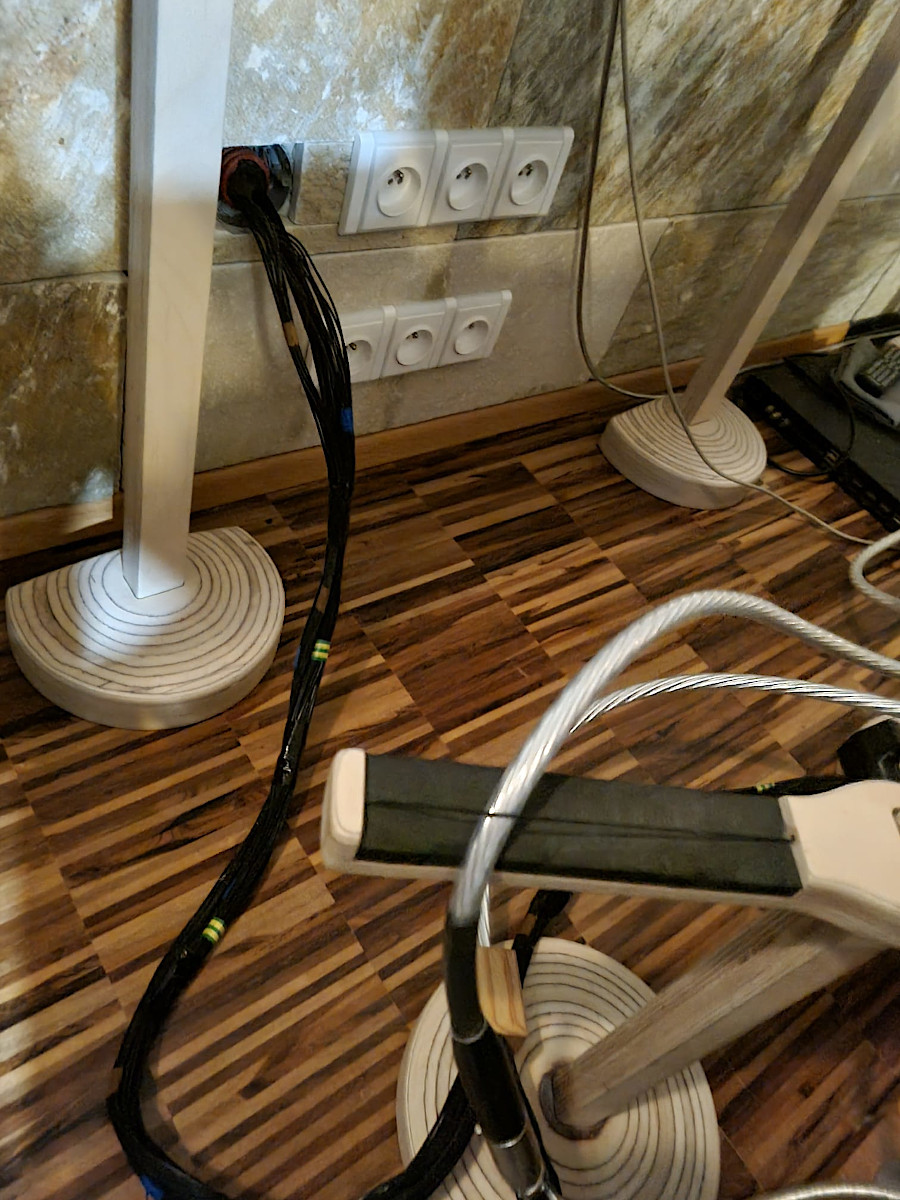
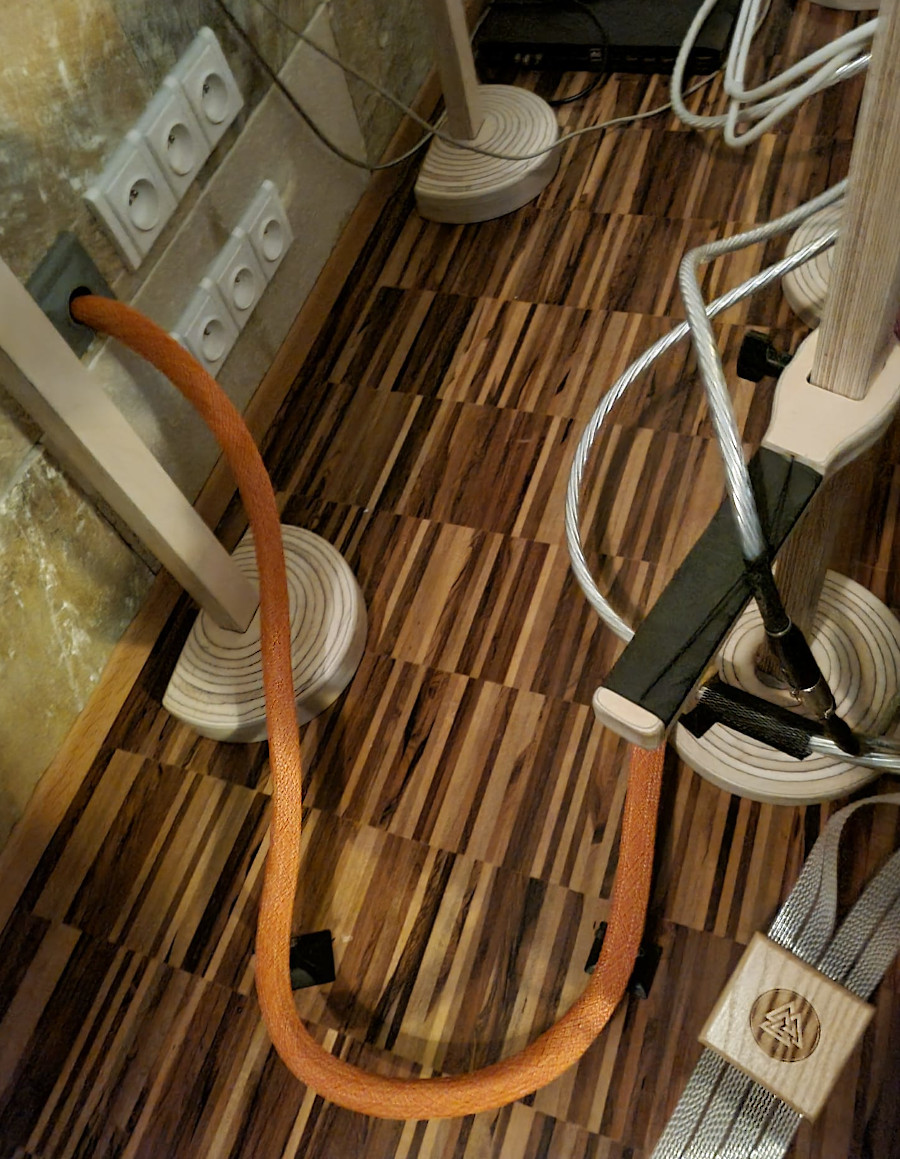
With an upgrade, such as Silent Grid, experimenters will lose one option: the ability to swap out the power cords that are between the system and the wall. Theoretically, they don’t have to—there is still the option to terminate the dedicated mains circuit at the wall outlet rather than at the first piece of electronics. But that doesn’t make much sense, though then again, what does make sense in hi-fi, right? Another degree of freedom is the fuse in the circuit breaker; given the late hour, we didn’t delve into it further, but swapping it out for a different one and listening for differences is an activity for an evening or two.
The question remains whether such an extreme project makes sense. From a purely sonic standpoint, the answer is clear: it does. I’m not claiming it will solve all problems, and it’s still true that I personally wouldn’t embark on such an adventure if I owned a system worth only e.g. €10k. Another legitimate consideration is whether good filtering could be a substitute for the Silent Grid. In my opinion, these are two different things, and the goal of the project was to eliminate all the trouble before it reaches the listening room, not to treat the symptoms. However, no power supply circuit can make an audio system 100% immune to various types of interference, so filtering will continue to play an irreplaceable role.
And then there’s the question of cost. The project cost the investor approximately €16,000 including VAT (consulting, labor, materials, equipment, and time). That is no small amount. But you have to look at it in relative terms. The difference in sound quality is comparable to upgrading an amplifier or a source component; if I sell my a high-end component at a loss and buy a new one, given current price ranges, I’ll end up spending a similar amount. Or—and this was a realistic consideration for the owner—if instead of another Nordost Odin 2 (currently €29,000 for 2.5m), he invests in the Silent Grid, he’d actually save €13,000 while getting better sound.
It’s clear that in an apartment building, a block of flats, or a house without land, you cannot do something like this. But if you have certain options available, I definitely recommend reaching out to Silent Laboratories and discussing the whole matter. It’s worth it.
Contact: Silent Laboratories, +420 777 772 642, This email address is being protected from spambots. You need JavaScript enabled to view it.
(C) Audiodrom 2026