PSI AUDIO AVAA C20 Active Velocity Acoustic Absorber
The sole purpose of the PSI Audio AVAA is to remove room coloration from the sound. Theory and practice agree on this: less of the room equals more of the recorded sound. I could now write several pages about how the C214 performed on this or that piece of music, but that seems rather pointless to me. This isn’t at all about whether you get it right in terms of the overall balance of the playback chain, as is the case when replacing an audio component or a cable. Working with the AVAA is more like peeling an onion. Although you have an idea of what’s inside, you can’t see it or taste it until you’ve peeled away all the layers that protect it. AVAA works to remove those layers much like a well-thought-out acoustic treatment for a listening room or studio, with the only difference being that you don’t need cubic meters of acoustic material or experiment with tuned membranes to do it.
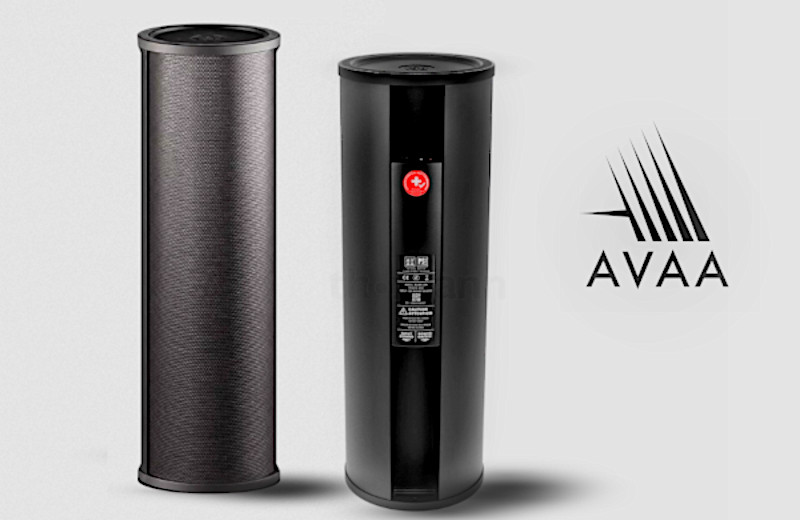
A digital Swiss Army knife
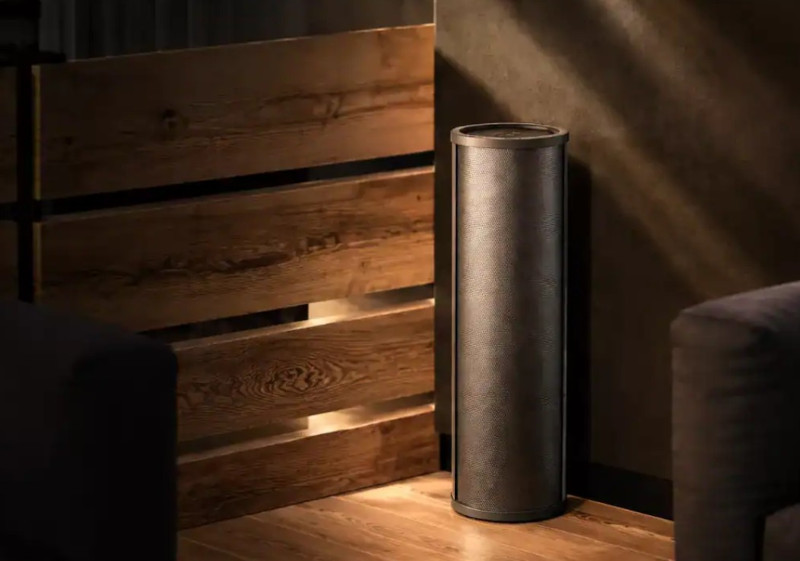
I’ve already written at length about what PSI Audio’s active absorbers can do in my review of the original AVAA C20. Those were purely analog. The AVAA C214 operates digitally, with greater precision, and its output is adjustable. It’s also smaller and sexier. The original MDF trapezoid has been replaced by an aluminum cylinder with a diameter of 210 mm and a height of 640 mm, available in black or white. The operating principle is the same: a built-in microphone responds to sound pressure and sends a signal to the built-in amplifier, which then emits a counter-pulse through dual acoustic transducers. With the C214, you can adjust the strength of the counterpulse within a range of -12 dB to +6 dB from the calibrated 0 dB. This is a bit confusing because 0 dB doesn’t mean that AVAA is turned off; it means it’s operating at the factory default setting. Negative values represent attenuation relative to the factory setting, while positive values represent amplification; it depends on how much you want to tame the bass, how many AVAA units you have in the room, and so on.
If you only have one C214, you can easily control it using the buttons on the rear panel, where you can manually adjust all the settings. If you have more than one or want to hear changes from your listening position without getting up and right away, install the app on your phone (Android or iOS). This will let you adjust settings on the fly, as well as group units into custom groups and control them together. In fact, this way you can even tailor the bass reverb in the room to the material you’re listening to or mastering. The distributor (Disk Multimedia) quite aptly describes the AVAA as a Swiss Army knife for bass acoustics in the listening space. I can’t help but agree. The previous C20 version didn’t have these capabilities.
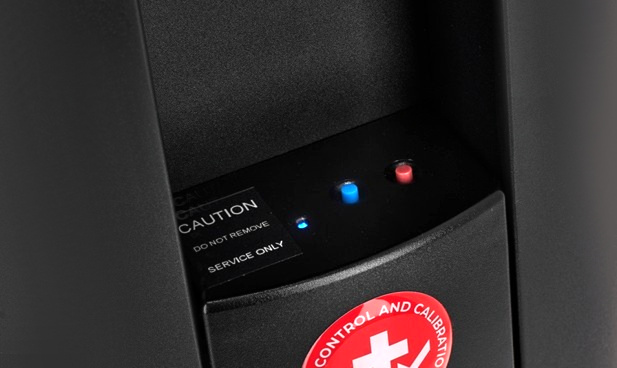
The AVAA can be manually controlled by these two buttons. I highly recommend using a mobile phone app as it offers much more versatility.
The placement guide is similar to that of the previously reviewed AVAA C20 model. You can place it on the floor or hang it near ceiling, as the manufacturer recommends. You can even lay or hang lay them horizontally, or upside down, or place them at an angle—the possibilities are endless. The key is knowing where to put them. The C214 is my third AVAA speaker, and to maximize the sound quality, the following approach has worked for me every time.
Where to?
1/ Figure out exactly what you want to address. Unless you purchase multiple AVAA units, a single unit won’t probably have the anticipated effect on modal peaks or dips. Room dimensions are the dominant factor there, and you’ll achieve better results by focusing on the placement of your speakers and your listening position. However, the AVAA can reduce the reverberation time of modal peaks. In other words, it can make the cannon shots in Tchaikovsky’s 1812 Overture truly thunder—rather than just rumble. You’ll recognize it easily: suddenly there’s a sharp burst in a rapid pressure wave, turning it into a transient event rather than a prolonged low-frequency rumble.
You’ll likely find one or two modes in the room that are the most bothersome (in terms of dB peak and long reverberation). You need to target those specifically—don’t just assume that if you toss the PSI Audio AVAA into a corner, it will solve the problem for you.
2/ Measure where in the room those modes reach their peaks. You don’t need anything sophisticated for this - a cell phone with a decibel meter app will do or even use just your own ears. I don’t really recommend the latter, though; we’re talking about bass resonances, and after a while of testing, you won’t be able to distinguish anything at all and will have to wait until the next day for your hearing to recover.
Try to find as many of these bothersome peaks as possible; search not just near the floor, but also along the walls, at various heights. I have three AVAA units at home, and not a single one ended up directly on the floor.
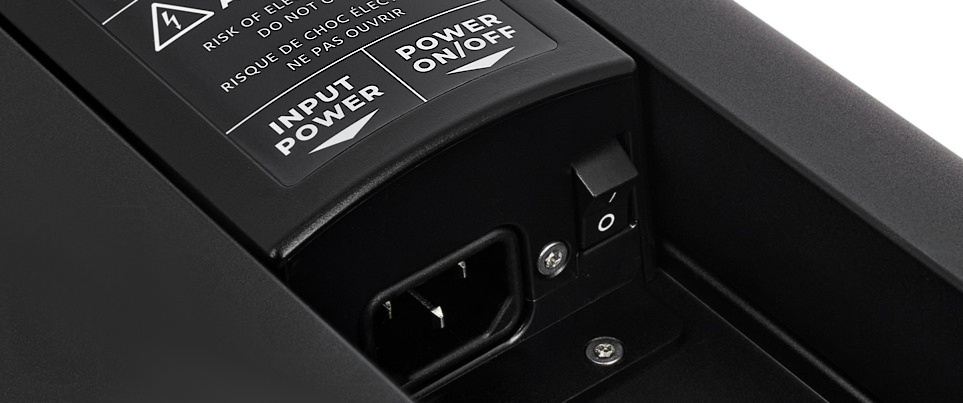
Power inlet through a standard C15 IEC connector.
3/ One by one, explore what the AVAA unit does in the maxima you identified. If it’s further up from the floor, use something to help you elevate the unit to the right height. Plastic pipe fittings work quite well—you can get them for just a few euros at hobbymarkets. They come in various lengths, and you can extend them as needed; the 10-cm diameter (DN100) ones are perfectly stable, and the AVAA C214 unit stays securely balanced on them. Once you’ve found the best spot, permanently mount the unit or units there. If you’re lucky enough to have it standing on the floor, you’re all set. If you need to mount it elsewhere, the manufacturer also supplies a practical bracket for the C214, though it does have one catch.
4/ The smaller the space you’re working with, the more sensitive the AVAA is to its placement. Even if you’ve found the right spot, you can further optimize the sound by adjusting the unit’s orientation by rotating it slightly. This is likely related to the placement of the internal microphone; even a few degrees can make an audible difference in the response. In large spaces where you’re dealing with multiple sound reflections, the orientation probably won’t be critical. In those cases, you’re not trying to aim like a sniper—a reasonable tolerance range is sufficient.
Now here’s the catch. If you use the bracket provided by the manufacturer, you won’t be able to adjust the unit’s rotation angle. The AVAA bracket secures the unit to the wall or floor at a fixed angle. That’s why I had to make a DIY bracket. Dear manufacturer, I see some room for an improvement here.
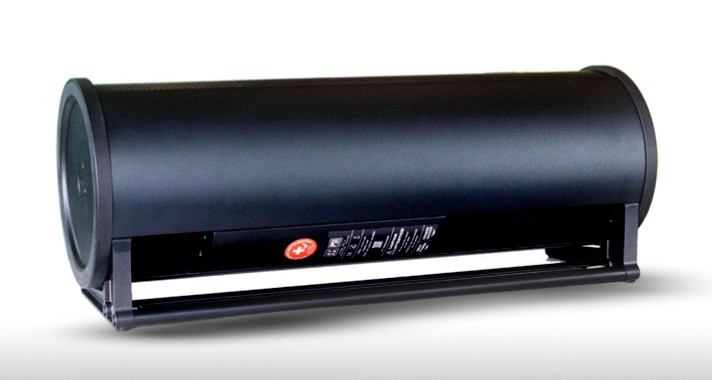
The original PSI Audio bracket is not a part of the package - it is sold separately. With the bracket, the AVAA can be easily attached to the floor, ceiling, or a wall.
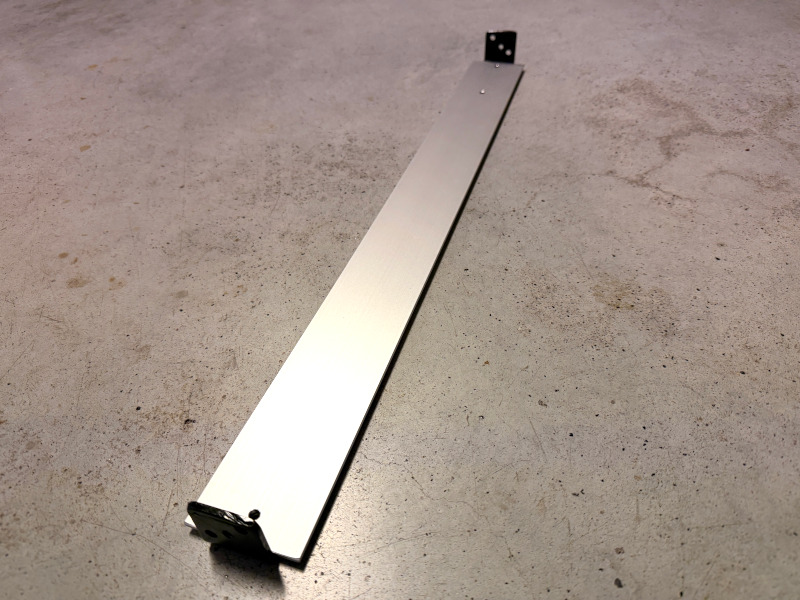
My own improvised bracket that I made to be able ti rotate the C214 for further sound optimization.
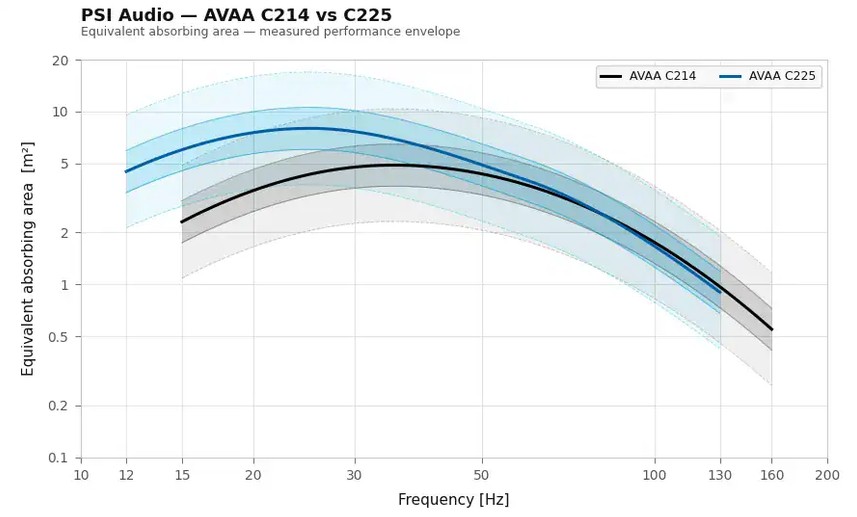
A single AVAA C214 can handle sound pressure levels of up to 115 dB. You can control how hard it works primarily by adjusting the sensitivity setting. And, of course, the type of material you’re listening to also plays a role. With dynamically compressed recordings, it’s unlikely you’d be able to play them very loudly in a room. With dynamically recorded material featuring 12–16 dB dynamic peaks, it’s a different story. The AVAA C214 displays its current power output in the app, much like a tachometer shows the engine’s current RPM. In my own listening space, with the unit positioned as described, the AVAA’s peak output power for dynamically recorded material hovers around 30–35% of the device’s total range; this for approximately 90 dB at the listening position and with the sensitivity set to the lowest level of -12 dB. In the corner of the room, it reaches up to 60%, but there the AVAA doesn’t meet my needs. In larger spaces, a single unit will certainly not be enough, and after all, it isn’t even designed for them. If you want to address, for example, club or concert hall acoustics, PSI Audio now offers the AVAA C225, which returns to the trapezoidal footprint of the C20, has a larger internal volume, and, as a result, a frequency response shifted more toward the lower end.
To sum it up, the PSI Audio AVAA units are the most effective solution for low-frequency modes I’ve ever encountered. The second most effective option is to move the house and hope that things will be better in the new space, which I honestly doubt. At the same time, it’s also the most elegant solution, and the AVAA C214 clearly has the edge over other acoustic treatments in terms of visual appeal. At slightly over 3k€ per unit, it’s one of the most cost-effective solutions; it will benefit your sound more than replacing your audio components. And if you add up the costs of the traditional approach (professional analysis, consultations, designs, bass absorbers and traps, time, and labor), I doubt it’ll be a cheaper option. Plus, you can turn off, transport, or relocate the PSI Audio AVAA at any time, so we’re talking about considerable versatility.
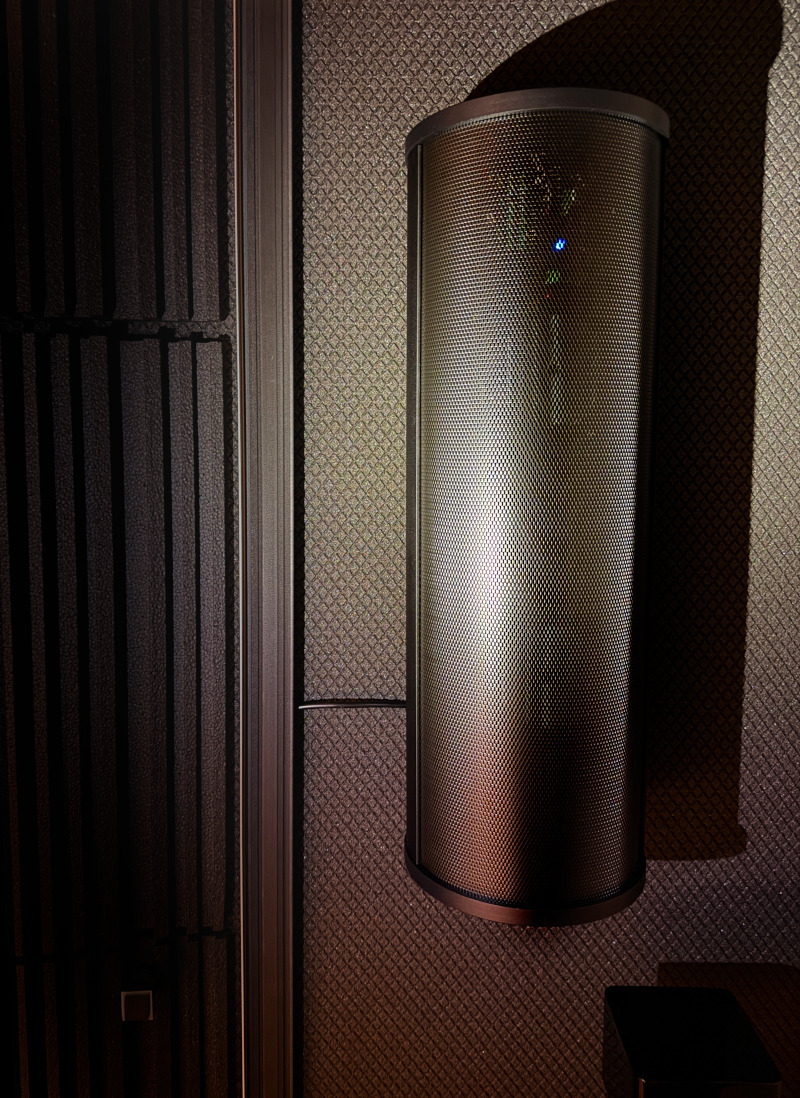
View through the grille: There is a microphone, a control board, two rear-firing drivers, and patented system that is hidden behind it.
The AVAA units can be recommended to practically anyone who is serious about good sound. It’s not money down the drain; it’s an investment in the environment in which you operate all your other components. Those components may come and go, but the AVAA, as a fundamental and decisive element of the final sound, will always be there to do its job.
Price as reviewed: 3000 EUR per piece
Manufacturer: www.psiaudio.swiss
Distribution: Disk Multimedia, Boskovice, +420 516 802 488
(C) Audiodrom 2027
Associated components:
- Sources: Accuphase DP-720
- Amplifiers: TAD-M2500 MkII
- Interconnects and speaker cables: Ansuz Signalz C2, Krautwire Max-S, Gryphon Vanta, Audioquest Dragon Bass | Zero, Shunyata Research Sigma-X, Gryphon Vanta, Krautwire Numeric
- Loudspeakers: TAD Revolution One, Sonus Faber Gravis subwoofer
- Power conditioning: Shunyata Research Denali, Ansuz Mainz C2, AAI Maestoso, AAI Estremo, Synergistic Research Atmosphere Level 2, Synergistic Research Euphoria Level 3, Stromtank S1000
- Accessories: SNDSTG LOCK platforma, Synergistic Research HFT and Synergistic Research Blackbox system, Nordost Qk1, Qv1, QSine, QWave, ASI Sugar Cubes, Stein H2 Harmonizers, Stein Ground Cube Silver Signature, Nirvana Audio Sound Optimizer, Diamond Sound Ground Unit, AAI Estremo Pads, Stillpoints Ultra V6, Stillpoints Ultra Mini, Finite Elemente Cerabase, PSI Audio AVAA C20