WADAX Studio Player
Digital sources
Sometimes it is good to re-check your sanity points, that is to recalibrate your internal product hierarchies. Like most of you, I browse the internet too to see what’s the latest hype in audio. A year ago, I got triggered by the all-time winner of the audiosciencereview.com DAC list, the Topping D90SE, that (in that list) clearly outperformed Mola Mola Tambaqui which I consider to be one of the better DACs out there. I organized auditioning and was unimpressed. Similarly, I’ve gotten involved in Aries Cerat hype recently. I had their Kassandra in for a review, and it was an excellent if somewhat clumsy to use DAC; here the hype lived up to expectations. Wadax is another brand that has grown big in digital quite recently, by launching their astronomically priced Atlantis line that, in its full stack, equals the budget for a NASCAR racing car. The latest offering from the house of Wadax, the Studio Player is, for what it does, one of the most sensational buys in high-end audio.
Funkce a forma
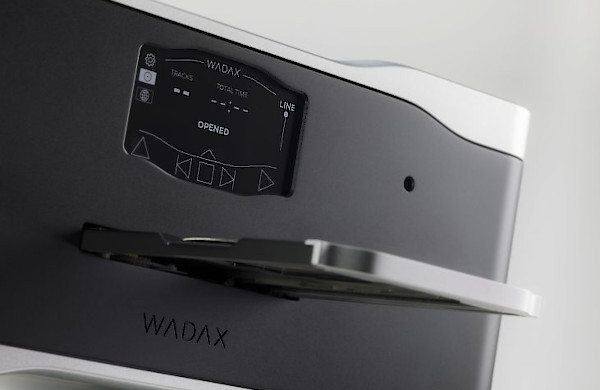
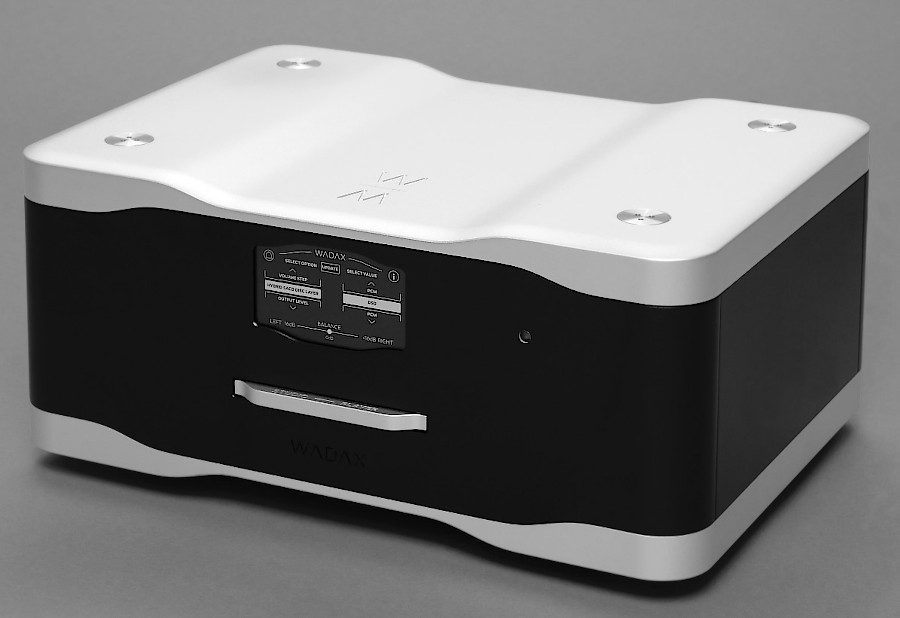
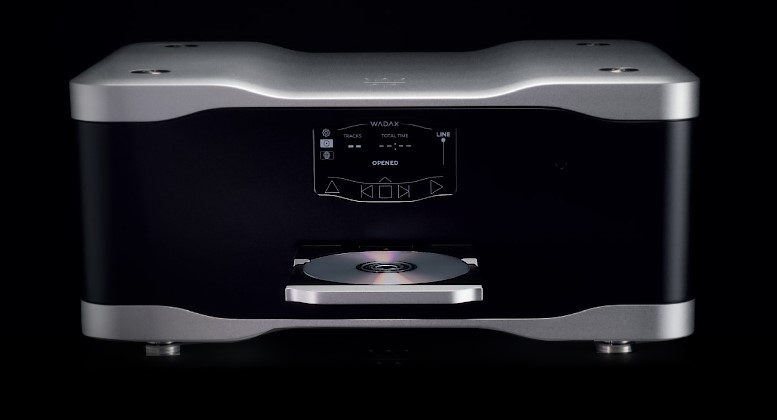
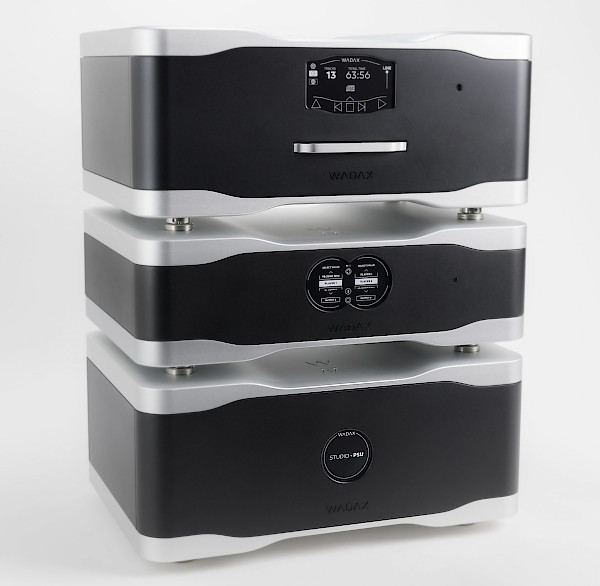
The Studio Player weighs 30kg and is built like a tank from outside and inside. Sans amplifier, it integrates everything that you may need to play music – it is a streamer, a CD/SACD player, a DAC, and it even has volume control. Connect an amplifier and speakers and there you are.
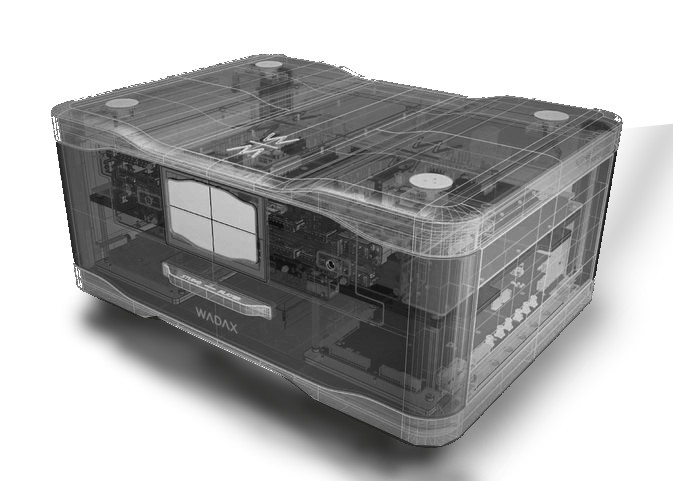
This Wadax is an antonym for simplicity. The working circuits have not less than 40 separate circuit boards and thousands of parts. It is also because the designers believe that everything starts with good isolation of individual parts to prevent noise pick-up, and with clean power supply; so there are five stages of initial DC regulation followed by a cascade of 30 local power regulators. The DAC benefits from the same D/A conversion techniques that were developed for their Atlantis Reference DAC, which includes their tech for correcting for the time and phase errors in real time, called simply “musIC”. The musIC correction is an intriguing concept. The devices computational power calculates the relationship function between the input and the output signal and ‘predicts’ which corrections must be made to the input so that there are fewer errors on the ouput. Similarly to e.g. Taiko, the Wadax’s power is in its software which is a kind of unique.
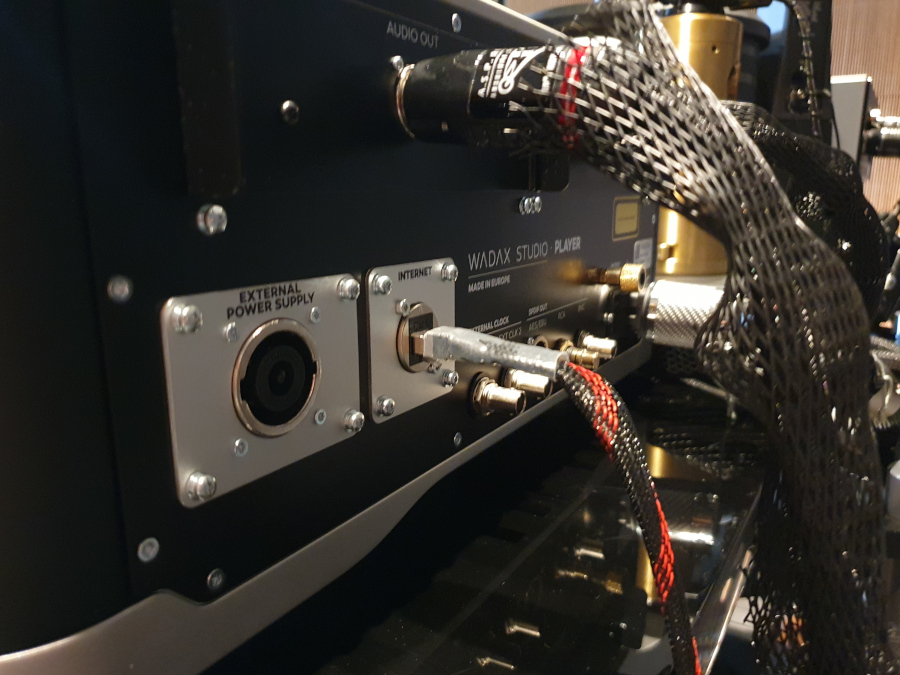
I am not going to elaborate on what the Studio Player can play from what’s available in terms of streaming platforms and their various protocols – it can do virtually anything and Wadax is on guard for upcoming industry updates. The question of whether this device will be up-to-date in future has the only answer: it will. The only limitation is that the Studio Player cannot be connected via USB. This means no computers, external drives or flash drives, unless they are mapped and shared on the internet network so that the player sees them.
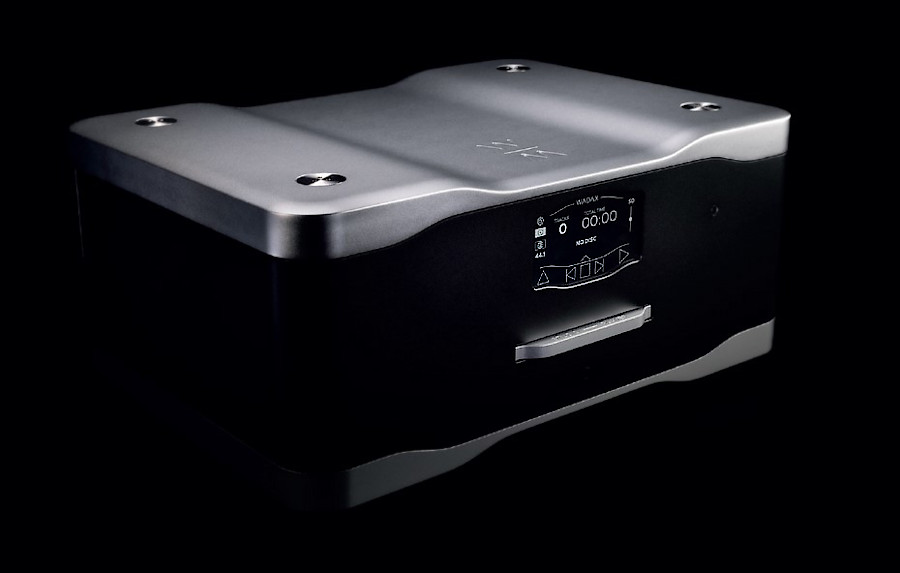
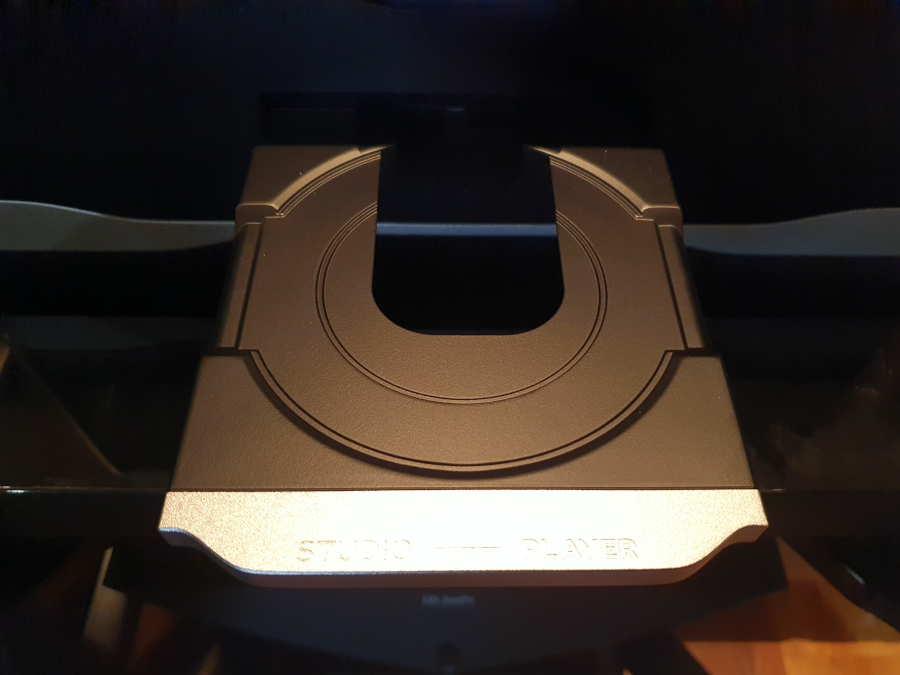
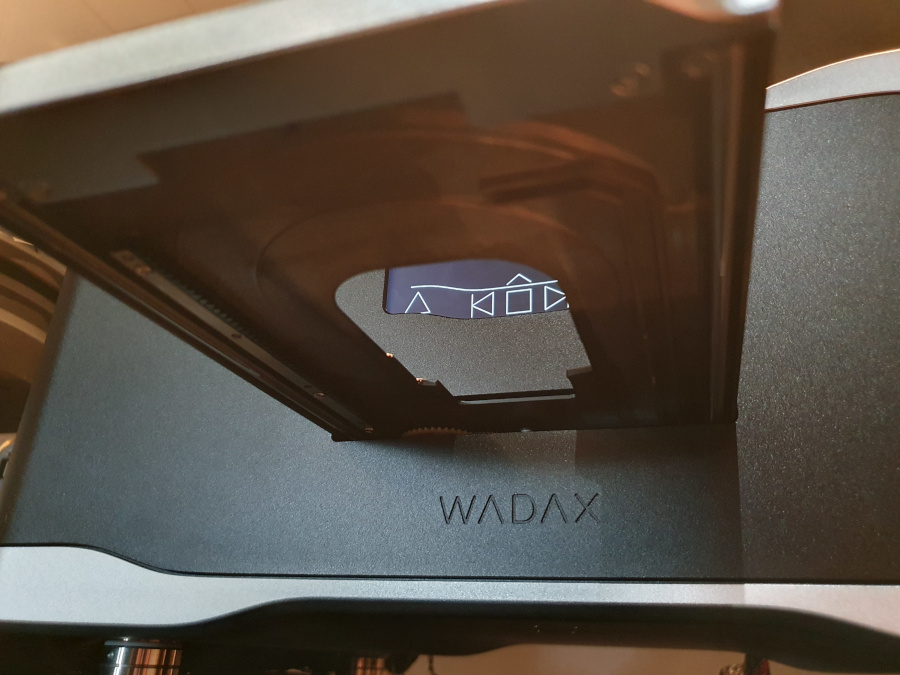
The parts and boards inhabit a sculptured chassis that looks as good as it sounds. While the Atlantis line shows off technical extravaganza, the Studio Player is cleaner and neater in design. To me, it is one of the best-looking audio devices. The fit and finish is immaculate, with one exception: the plastic tray of the transport feels cheap and actually is cheap. It is also noisy in operation if you compare it to the likes of Accuphase, Luxman, Esoteric, or TAD (why all these are Japanese?) with their buttery feel and precise Swiss-watch mechanisms. But I understand Wadax and their choices: the CD/SACD playback option is a bonus, not the main purpose of the Studio Player. Should they consider to launch a standalone transport in the Studio line, they should address it as they did in their Atlantis Reference transport.
Nízké frekvence
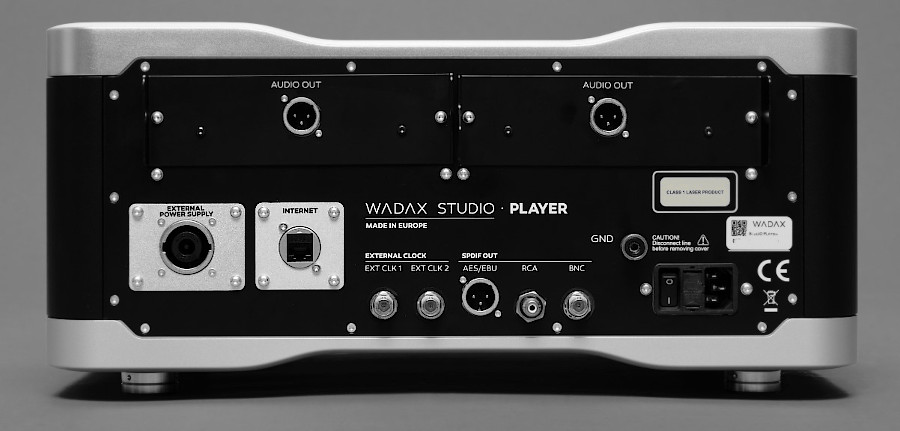
For analog signals, the Studio Player only provides left and right XLR, with no RCA outputs, because it is conceived as a fully balanced DAC. It cannot be used as an external DAC either – there are no digital inputs. As there is a streamer and a disc transport in the device, Wadax doesn’t think a user will need any. However, there are three digital outputs (Coaxial S/PDIF, BNC, AES/EBU). Again, I’m not sure why would anyone buy the Studio Player to connect it to an external DAC? Perhaps it would be better to integrate a digital out/in loop for an external DSP processor. Finally, there is a grounding post (chassis ground) which is a welcome feature.
The player rests on wiggly feet that are a variation of a cone against a shallow cup. Using aftermarket feet is a bit more difficult than with other DACs, for the Studio Player’s bottom plate follows the same curvature as the top plate. I yet have to hear a piece of equipment not improved by Stillpoints and the Wadax is not an exception. The Ultra 6 V2 added a layer of resolution and articulation across the whole frequency spectrum.
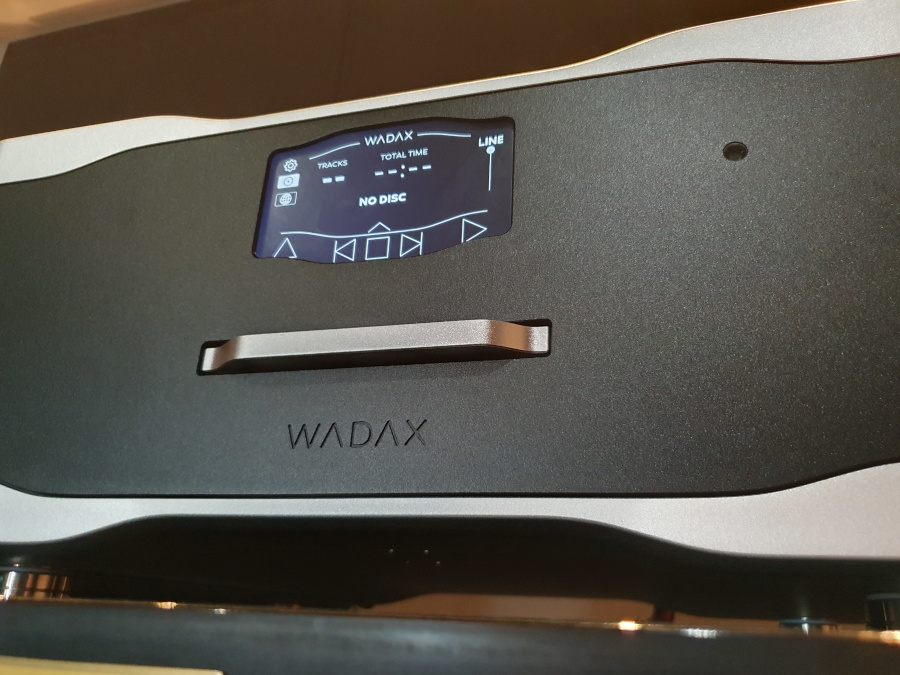
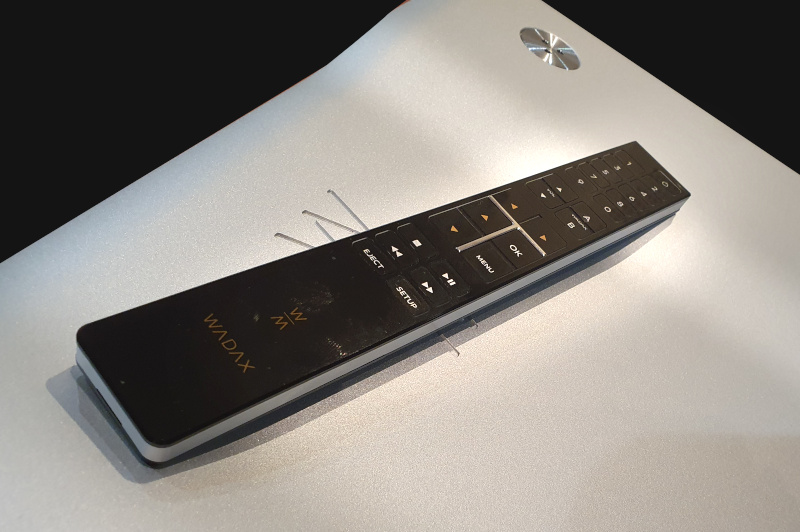
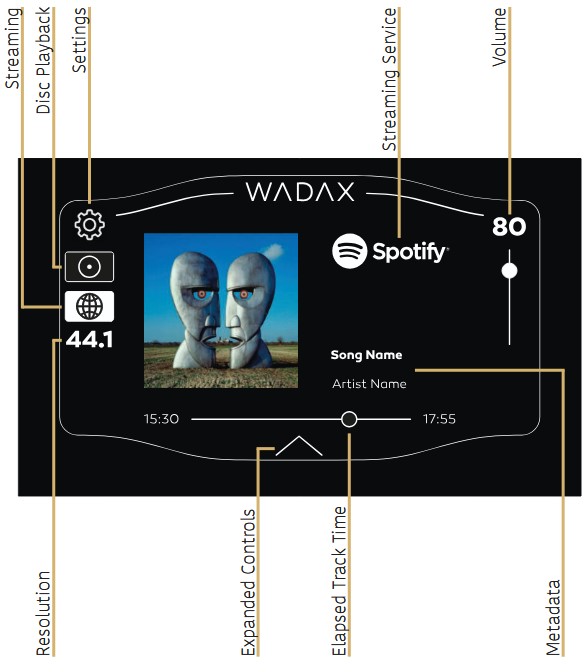
The Wadax Studio Player is shipped with a remote controller wand which is sleek and long, has sharp edges and requires some adaptation time. The orders sent by the remote controller have a second or two of latency before they are executed, which is also sometimes confusing as I think I did not press the button, then I press it again and the player does something else I ask it to. Once you get the rhythm it works reliably, but it is different from what I am used to with my Accuphase. It seems that Wadax relies on using a streaming app to control the playback and I agree it is a better option for controlling the device. But things are changing even while writing this text as software updates are automatically detected and uploaded. It happened during the review that the Studio Player updated itself and suddenly buttons on the remote, like fast forward, started to work. Wadax is working on other updates too, so hopefully more functions will be added to the remote – for example an option to see remaining track time, the repeat function, or adjusting the parameters in the set-up menu. At the time this review was published, the only way to make it work was to kneel in front of the player and do it by tapping the 5” touch display. Speaking about the display, I like its simple monochromatic layout (album art is shown in full colour, though) and the effort which designers made to make its graphics lines curved the same way as the chassis. It is nice and unintrusive. On the flip side, the characters are very small and hardly legible from the distance of 2 meters or more.
Čistota rozlišení
The Studio Player has 3 features that make it a really outstanding and versatile beast.
First, it allows to switch polarity (0-180°), that is to inverse the voltage to maintain signal integrity vs the reference (= recording). Try it, it is easily audible. In one of the reference systems the sound was the best in 0° setting, in the other in 180° setting.
Second, the user can choose between 1, 2, or 4V of output voltage. Try and listen to each and then choose what sound the best to your ears. With 4V the system sounded overdrive, with 1V amoebic, and 2V felt just right in our case.
Third, you can sculpt the tonality and dynamic behaviour of the Studio Player by adjusting output impedance vs the input impedance of the connected preamplifier or power amplifier(s). In the menu it is possible to switch on the fly between 0 (I have no idea how zero resistance is achieved in the Studio Player and Wadax does not say a word about it), 7.4, 7.5, 8.2, 8.3, 8.7, 8.83, 9.8, 10,
28, 30, 46, 50, 66, 75, and 600 Ohms. From lower to higher settings, I could hear the sound going from accurate/incisive/clearer/thinner to accurate/relaxing/warmer/thicker, although it is a bit oversimplified characteristic. I played with the impedance setting a lot and it did not work in a linear fashion. I could identify several unconnected values that sounded the best but each quite different (7.5, 8.3, 30, 75). Finally, the player was left in 30 Ohms setting that provided a sweet spot between articulated and full-bodied presentation.
Tonální věrnost
The Wadax Studio Player is, after Accuphase DP-770, another excellent CD/SACD player that I have auditioned this year. I am happy that silver disc spinners are not dead and some manufacturers continue improving the playback of physical digital formats. While the Accuphase DP-770 offered very distinguished and rich presentation that felt sumptuous and luxurious in a way, the Studio Player offers a bit more neutral way of playback, although it is not less distinguished and rich. Is it better than the Accuphase? For my ears it is. But you pay twice as much.
The Studio Player provides tons of resolution, no matter whether in its streaming or its disc playback mode. The sound is organized, pristinely clean, smooth, and effortless. It is like your ears are unpressurized when the Wadax is playing, the sound is not forced through, it is just there. Still, the presentation is powerful and dynamic. Rabaud´s Mârouf opera suite (Eiji Oue, Reference Recordings) is a good example. The delicate oboes and flutes feel like real instruments playing in a real venue, the sound is firm, textured, and dynamic. Through lesser players this recording often sounds too airy, as if mouthpieces of the winds were connected to an oxygen tank. Short-term it seemingly provides better ´detail´, after while it induces headache. The Studio Player is far from that, the colours are just right, and all instruments are enjoying strong tonal fundament and true harmonics.
The well-balanced sound helps vocals shine and seduce. Like the caressing baritone of Nat King Cole, that remains deep and relaxed through the Wadax. So is the soulful mezzo-soprano of Adele. There is no audible ´equalization´, the voices rare totally honest and free of colourations, but rich in colours. It is true that the Studio Player adds a very subtle touch of warmth and liquidity, which may not be a result of the player tinting the music and adding anything actually - rather it is lack of digital grain.
The bass, when well recorded like the one in Wishing Well (Michael Ruff, Sheffield Labs), is warm, round, punchy, and energetic. Or take The Wall of Pink Floyd, where the bass can be truly grand if nothing is closing the tap of energy. Or the way the Studio Player renders a guitar combo in the front right corner of the room when Nazareth’ Telegram kicks in. Then you can see the combo’s thick speaker grille cloth moving with each lick. Also Get Over It (Eagles) through the Wadax is one of the best playbacks of this song I’ve ever heard. The Studio Player does not discriminate any music genre, be it rock, jazz, or chamber music. It is an important feature if your taste is not limited. It is also the reason why I would pick up the Wadax rather than the aforementioned Accuphase DP-770, that perhaps outperformed the Studio Player with extra layers of smoothness in classical music, but was missing the bite and rawness in rock.
Prostorovost
How about the comparison CD vs SACD vs streaming? I chose No Sanctuary Here (Chris Jones) as a guinea pig and compared Stockfisch Records hybrid CD/SACD disc vs identical tracks on Tidal and Qobuz in 16bit/44.1kHz. To cut the story short, the SACD layer was better than the CD layer in dynamics, flow, and resolution, no surprise there. However, the CD layer outperformed both streaming services by a big margin, Qobuz being slightly more complete rendering of the track. It is consistent with what I use to hear with other digital players too. Mind you, it is a comparison of the Wadax-style physical and streaming media content. Should I only compare the Wadax streamer with most physical players, it would give them hard time.
Now I will drop a bomb: for my ears, the Studio Player conquered the combination of the Taiko Olympus XDMI system with the Aries Cerat Kassandra DAC that I had in the exact same system. The latter is 2.5-times more expensive combo than the integrated Studio Player. I think that the integration provides unique advantages that are unachievable with split components. It is why I don’t buy the idea of Wadax to expand the Studio Player into more devices.
Wadax announced that they are working on a dedicated Studio PSU (€33100) and a Studio Clock (€31700) for the Studio Player, as well as there is a standalone Studio disc transport in preprataion. For these, the Studio Player has a power supply connector and external clock connectors ready around the back of its chassis. However, the beauty of the Studio Player is in the superb integration of its digital parts (transport, DAC, streamer, volume control) under one hood. It is fewer power cables and fewer interconnects and thus fewer variables, shorter signal paths, and larger convenience. So, despite I have no doubt whatsoever that these two new peripherals will elevate the Studio Player’s performance even further, I think they miss the point. But it may be that one day Wadax will discontinue the Studio Player and will only sell separates in several tiers. Until then, the Studio Player remains a king of integrated digital devices and one of the most competent and superb-sounding players available today. Go and get it, before Wadax recognizes it is way too cheap by their (and any other) standards.
Připojené komponenty
- Sources: Taiko Olympus XDMI system, Ayon CD-35 HF Edition SACD, Lampizator Horizon DAC, Aries Cerat Kassandra II Reference DAC
- Amplifiers: Audia Flight Strumento No.8 monobloky, Pilium Achilles power amplifier, Pilium Divine Alexander preamplifier, Audio Analogue Maestro 2.0, EAM Lab Classic 202i, Nobsound XLR passive attenuator
- Loudspeakers: Silent Laboratories Equilibrium, Kroma Atelier Matilde, YG Acoustics Sonja 3.2
- Interconnects and speaker cables: Krautwire Numeric Digital, Stage III Concepts Xphynx USB, Ckahron XLR, Cerberus speaker cable (single wire), Synergistic Research SRX XL
- Power conditioning: Telos Power Station Tai Chi Yin and Yang, Telos Grounding Station, Stage III Concept Leviathan a Poseidon, Synergistic Research SRX XL, Synergistic Research Galileo PowerCell SX a Active Ground Block SX, GMG Power X-Blocker Exclusive Edition, TweakGuru Horizonta virtual grounding scheme
Galerie
ACCUPHASE DG-58
The Accuphase DG-58 is a 4th generation 'voicing equalizer' of Japanese manufacturer. The device won me over with its impeccable finish, top notch operation and a friendly user interface. It comes in traditional satin gold with high ...
Doporučení prodejci
Nisel SK, Bratislava, tel. +421 905 203 078
ACCUPHASE DP-720 SACD
Accuphase engineers further expanded on the features that had made their DP-900/DC-900 transport/DAC combo so phenomenal - the result is the one-box DP-720. This player is built with almost fanatical attention to detail. The ...
Doporučení prodejci
Nisel SK, Bratislava, tel. +421 905 203 078
ACCUPHASE DP-770 SACD
Every new product from this Japanese manufacturer is a small feast, especially if it is a device positioned at the top of the product line. Also, although affordability may be a relative term, spending under 20,000 euro for a digital ...
Doporučení prodejci
Perfect Sound Group, Praha, tel. +420 722 960 690
Nisel SK, Bratislava, tel. +421 905 203 078
ARIES CERAT Kassandra II Reference DAC
After spending time with the Aries Cerat device I believe I better understand why there is so much enthusiasm about the brand in hifi circles. The Kassandra DAC, if set up properly, provides pure and strong sound that combines ...
Doporučení prodejci
Mecca Highend s.r.o., Vraclav, +420 732 576 216
AUDIOLAB 8300CD
The 8300CD is a preamplifier, a CD player and a DAC (ESS Sabre), all in one neat package. Audiolab offers 8300MB monoblocks that are half-width of the 8300CD so the two monos and one source component create a compact high end system. ...
Doporučení prodejci
Horn Distribution, Praha, +420 272 656 485
AUDIOQUEST Dragonfly Red
The original USB DAC of Audioquest happened to be a small revolution back in 2012. Four years later there are already more newborn dragonflies – v1.2, Black and Red. This review is focusing on the latest Red version that has ...
Doporučení prodejci
AQ s.r.o., Červenka, tel. +420 585 342 232
AYON CD-07s
Smooth liquidity is another typical element of the Ayon sound. The sound is analog-like, viscose, fluid, flowing, smooth. You may as well discard all these adjectives and replace them with the single formulation: the Ayon is a ...
Doporučení prodejci
Nisel SK, Bratislava, tel. +421 905 203 078